
Quick Answer
GPS guard tracking leverages global positioning satellite technology to monitor the real-time location and movements of security personnel. It enhances operational efficiency, ensures guard safety through features like panic buttons and geofencing, and provides verifiable data for patrol management and incident response by digitally logging patrol routes and activities.
Key Facts
- Over 70% of security companies globally are adopting GPS tracking for heightened oversight.
- Geofencing capabilities can reduce unauthorised guard deviations by up to 40%.
- Real-time alert systems decrease incident response times by an average of 30%.
- The market for security guard management software, including GPS features, is projected to reach $4.5 billion by 2027.
- GPS tracking provides 99.9% accuracy for location data, crucial for critical security scenarios.
In the dynamic realm of security operations, efficient management and accountability of patrol personnel are paramount. Manual systems, often reliant on paper logs or physical check-ins, are increasingly inadequate for the complexities of modern security challenges.
What is GPS Guard Tracking?
GPS guard tracking refers to the use of Global Positioning System technology to monitor the physical location and movements of security guards in real-time. This system typically involves a GPS-enabled device carried by the guard, which transmits location data live to a central cloud monitoring platform. The data provides a comprehensive, real-time overview of patrol routes, timings, and stops, offering invaluable insights into operational effectiveness and guard accountability.
Beyond mere location pinpointing, advanced GPS guard tracking systems integrate features like geofencing, panic buttons, and live incident reporting. These functionalities transform a basic tracking tool into a robust security management platform, ensuring guard safety, optimizing patrol efficiency, and providing verifiable records for compliance and audit purposes.
How GPS Guard Tracking Works
- GPS Device: Each guard carries a portable GPS tracker, which can be a dedicated device, a smartphone application, or integrated into a guard tour system handheld.
- Satellite Communication: The device receives signals from GPS satellites orbiting the Earth, calculating its precise geographical coordinates.
- Data Transmission: These coordinates, along with other relevant data like status or speed, are transmitted live via cellular networks (GPRS, 3G, 4G, 5G) to a central cloud server.
- Monitoring Platform: Security managers access this data through a web-based dashboard or mobile app, visualizing guard locations live on a map, reviewing historical routes, and receiving instant alerts.
- Analytics & Reporting: The system compiles data into detailed reports, offering insights into patrol adherence, time on site, and incident frequency.
Key Features of Modern GPS Guard Tracking Systems
Modern GPS guard tracking solutions offer a suite of features designed to enhance security operations, rather than solely focusing on location tracking. These functionalities provide a holistic approach to guard management and safety.
| Feature | Description | Benefit to Security Operations |
|---|---|---|
| Real-time Location Tracking | Live display of guard positions on a digital map. | Instant oversight, quick deployment of backup. |
| Geofencing | Virtual boundaries that trigger instant alerts upon entry or exit. | Ensures guards adhere to assigned patrol zones; prevents unauthorised access. |
| Panic/SOS Buttons | Dedicated button on device for emergency alerts. | Immediate notification to supervisors in case of distress or incident. |
| Route History & Playback | Review past patrol paths and timestamps. | Verifies patrol completion, aids in incident investigation. |
| Incident Reporting | Guards can digitally log incidents with photos and notes, which upload instantly for immediate review. | Structured data collection, faster response, improved record-keeping. |
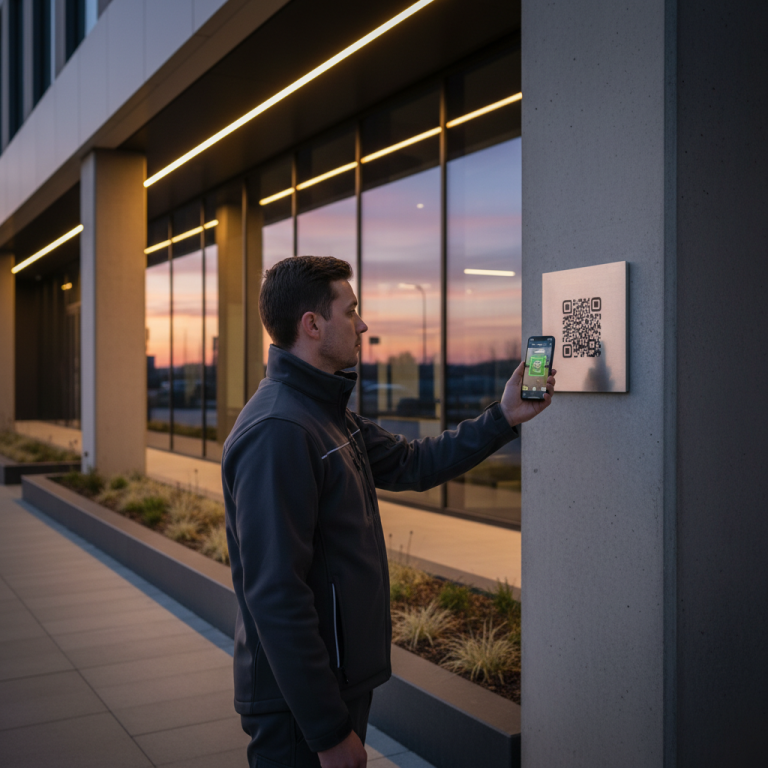
| Proof of Presence (NFC/QR/Barcode) | Scanning checkpoints at specific locations. | Confirms physical presence and validates patrol routes. |
| Automated Alerts & Notifications | Instant alarms for deviations, missed checkpoints, low battery, or inactivity. | Proactive management of potential issues; enhances guard safety. |
| Lone Worker Protection | Features like ‘man-down’ alerts, inactivity monitoring. | Ensures welfare of guards working alone in remote or high-risk areas. |
| Reporting & Analytics | Comprehensive reports on patrol performance, compliance, and incidents. | Data-driven decision-making, operational optimisation, compliance evidence. |
Beyond these standard features, leading solutions like Guard Patrolling further enhance security and accountability. For instance, Face Verification at check-in uses the guard’s smartphone camera to confirm the correct individual is starting their shift, preventing buddy punching. Additionally, automated Daily Email Reports provide a concise summary of all patrol activities, incidents, and guard attendance, which are sent to both security managers and clients, ensuring all stakeholders are kept informed.
Geofencing for Enhanced Security
Geofencing is a cornerstone of advanced GPS guard tracking. It allows security managers to define virtual perimeters around specific areas of interest, such as properties, buildings, or restricted zones. When a guard enters or exits these predefined zones, the system automatically triggers an instant alert. This capability is critical for:
- Ensuring Patrol Adherence: Verifying that guards are covering their assigned routes and not deviating into unapproved areas.
- Responding to Intrusion: Notifying supervisors if a guard, or an asset they are protecting, moves out of a designated safe zone.
- Automating Check-ins: Registering when a guard arrives at or departs from a site, streamlining timekeeping and accountability.
Panic Buttons and Emergency Protocols
The safety of security personnel is paramount. GPS tracking devices often incorporate a dedicated panic or SOS button. When activated, this button instantly transmits an alert with the guard’s precise location to the central monitoring station and pre-assigned contacts. This rapid communication is vital for:
- Quick Response: Enabling supervisors or emergency services to locate and assist a guard in distress without delay.
- Incident Management: Providing critical context and location during emergencies like altercations, medical incidents, or security breaches.
- Lone Worker Safety: Offering a lifeline for guards working in isolated or high-risk environments.
Benefits of Implementing GPS Guard Tracking
The adoption of GPS guard tracking systems yields significant advantages for security firms and their clients, transforming operational efficiency and elevating security standards.
Improved Guard Accountability and Performance
With real-time tracking and route history, there is clear evidence of where guards have been and when. This transparency fosters greater accountability, ensuring guards adhere to their patrols and duties. Managers can also identify inefficient routes or areas requiring more attention, leading to better resource allocation and performance optimization.
Enhanced Guard Safety and Lone Worker Protection
The ability to pinpoint a guard’s exact location, coupled with features like panic buttons and ‘man-down’ alerts, dramatically improves guard safety. If a guard faces danger or a medical emergency, assistance can be dispatched swiftly and accurately, providing peace of mind for both guards and management, especially for lone workers. For further details on how technology aids solitary employees, consider reading about lone worker monitoring solutions.
Optimised Patrol Routes and Resource Allocation
Analyzing historical GPS data reveals patterns and inefficiencies in patrol routes. Managers can use this data to redesign routes for optimal coverage, reduce fuel consumption, and ensure that personnel are strategically placed where they are most needed, maximizing the effectiveness of security patrols.
Accurate Incident Reporting and Evidence Collection
When incidents occur, GPS tracking data provides an irrefutable record of who was where and when. Guards can digitally report incidents directly from their device, attaching photos and notes that upload immediately to the cloud. This provides managers with live updates, streamlines incident management, and creates a valuable record for investigations, compliance, and legal purposes.
Client Satisfaction and Compliance Assurance
Providing clients with verifiable proof of patrols and quick incident response capabilities builds trust and demonstrates a commitment to security excellence. The detailed reports generated by GPS tracking systems can also serve as evidence of compliance with security contracts and regulatory requirements.
Choosing the Right GPS Guard Tracking System
Selecting an appropriate GPS guard tracking system involves evaluating several factors to ensure it aligns with your operational needs and budget. Consideration should be given to device types, software capabilities, vendor support, and cost.
Device Types: Dedicated Trackers vs. Smartphone Apps
- Dedicated GPS Trackers: These are purpose-built devices, often ruggedized, with long battery life and specific features like panic buttons. They are ideal for harsh environments or when guards don’t have company phones.
- Smartphone Applications: Many systems offer apps that turn a guard’s smartphone into a tracking device. This option is cost-effective but relies on the phone’s battery life and durability. A reliable internet connection is required for the app to transmit live data to the cloud.
- Integrated Guard Tour Systems: Handheld devices that combine GPS tracking with NFC/QR scanning, incident reporting, and communication tools. These offer a comprehensive solution for patrol management.
Software Capabilities and Integration
The tracking software is equally critical. Look for:
- User-friendly Dashboard: Intuitive interface for live monitoring and detailed reporting.
- Customisable Alerts: Ability to set instant alerts for various events like geofence breaches or inactivity.
- Robust Reporting: Comprehensive analytics on patrol performance, incidents, and guard activity.
- Integration Options: Compatibility with other security systems (e.g., CCTV, access control) or workforce management tools.
Vendor Support and Scalability
Reliable vendor support for implementation, training, and troubleshooting is essential. Ensure the system can scale with your organization’s growth, accommodating more guards, sites, or advanced features as your needs evolve.
For a detailed breakdown of costs associated with these systems, refer to our guide on security guard management system prices.
Implementing GPS Guard Tracking: A Step-by-Step Guide
Successful implementation of a GPS guard tracking system requires careful planning and execution.
- Assess Your Needs: Identify key security objectives, pain points with existing systems, and specific features required (e.g., geofencing, panic buttons).
- Vendor Selection: Research and select a vendor based on device options, software features, support, and pricing. Request demos and trials.
- Device & Software Setup: Configure tracking devices, install mobile apps, and set up the monitoring platform. Define geofences, checkpoints, and alert rules.
- Guard Training: Provide thorough training to all security personnel on how to use the devices, report incidents, and respond to alerts. Emphasize the safety benefits.
- Phased Rollout: Begin with a small pilot program to identify and address any issues before a full-scale deployment.
- Ongoing Monitoring & Optimisation: Continuously monitor system performance, gather feedback, and use data analytics to optimize patrol routes and operational protocols.
Real-World Application and Case Studies
“Implementing GPS guard tracking transformed our operations from reactive to proactive, significantly improving both our guards’ safety and our service delivery to clients.” – A Leading Security Firm in Mumbai
Consider a large industrial complex in Pune, India, employing a team of 50 security guards. Prior to GPS tracking, verifying complete patrol coverage was challenging, and responding to incidents in remote parts of the sprawling facility was often delayed. After implementing a GPS guard tracking system with geofencing and panic buttons:
- Improved Patrol Compliance: Managers could instantly see if guards were completing their rounds and staying within designated areas.
- Faster Response Times: When a guard triggered an SOS alert in a remote warehouse, supervisors were able to dispatch a team directly to their location within minutes, where previously it might have taken significantly longer.
- Enhanced Reporting: Digital incident reports with GPS timestamps became standard, providing clear evidence for investigations and insurance claims.
- Optimised Manpower: Analysis of patrol data led to the reallocation of guards, ensuring optimal coverage particularly during off-peak hours, without increasing headcount.
Similarly, a multinational corporation with facilities across Singapore, London, and New York uses GPS tracking to maintain consistent security protocols. The system ensures that guards adhere to global best practices, facilitates centralized monitoring, and provides robust data for international compliance audits.
The Future of GPS Guard Tracking
The evolution of GPS guard tracking is closely tied to advancements in IoT (Internet of Things), AI (Artificial Intelligence), and 5G technology. We can anticipate even more sophisticated features:
- Predictive Analytics: AI-driven insights to predict potential security risks based on historical patrol data, weather patterns, and local events.
- Augmented Reality (AR) Integration: Guards using AR glasses to overlay digital information (e.g., suspect identification, critical infrastructure data) onto their real-world view.
- Biometric Integration: Verifying guard identity and ensuring they are alert and capable of duty.
- Drone Integration: Coordinated patrols between human guards and autonomous drones, with both reporting to a unified GPS-enabled command center.
Frequently Asked Questions
What is the primary purpose of GPS guard tracking?
The primary purpose of GPS guard tracking is to provide real-time location monitoring for security personnel, enhance their safety through emergency features, and improve operational efficiency by optimising patrol routes and ensuring accountability. It offers verifiable data for reporting and compliance.
Can GPS guard tracking improve guard safety?
Yes, GPS guard tracking significantly enhances guard safety. Features like panic buttons allow guards to instantly signal distress and exact location for rapid assistance. Lone worker protection features, such as ‘man-down’ alerts and inactivity monitoring, further safeguard personnel operating in isolated or high-risk environments.
Is geofencing part of typical GPS guard tracking systems?
Yes, geofencing is a standard and crucial feature in most modern GPS guard tracking systems. It allows security managers to establish virtual boundaries that trigger automated alerts when guards enter or exit predefined areas, ensuring patrol adherence and preventing unauthorised movements.
How accurate is GPS guard tracking?
Modern GPS guard tracking systems typically offer high accuracy, often within a few meters, especially in open sky conditions. Factors like satellite availability, surrounding buildings, and the quality of the GPS receiver can influence precise accuracy, but it remains highly reliable for security operations.
What data can be generated from GPS guard tracking systems?
GPS guard tracking systems generate comprehensive data including real-time location, historical patrol routes with timestamps, speed, time spent at checkpoints, and incident reports. This data is crucial for performance analysis, evidence collection, and optimizing security deployment.
Are GPS guard tracking devices durable for security environments?
Many dedicated GPS guard tracking devices are specifically designed to be rugged and durable, capable of withstanding the demands of various security environments. They often feature robust casings, water resistance, and long battery life to ensure continuous operation in challenging conditions.
Related Reading