
Quick answer: Security guard patrolling is the physical act of a guard moving along a planned route a specific area to provide a visible security presence. The primary goals are to deter potential wrongdoing, detect any irregularities like unlocked doors or safety hazards, and be the first to respond to incidents.
I remember my first week managing security for a large factory in Manesar. We had 40 guards, a thick register book, and a supervisor who always gave me the same report: “Sab theek hai, sir”. Everything is okay. Except it wasn’t. One night, a small fire broke out in a storage area because of a short circuit. It was contained quickly, but the investigation showed the patrol guard for that zone hadn’t checked it for over three hours, despite his logbook showing perfect, hourly entries. He was sleeping in a utility closet.
That incident taught me a fundamental lesson. Patrolling is not just walking around; it’s the core function of a physical security team. It is a proactive measure that, when done right, prevents incidents from happening. When it’s done wrong, or not at all, you are just paying for uniforms and a false sense of security. It’s the difference between having a security “presence” and having a security “function”.
Still running patrols on paper? See live checkpoint tracking in action with our 15-day free demo — 1 guard, 1 site. No card required. Check GuardPatrolling plans and pricing.
What Exactly is Security Guard Patrolling?
At its heart, security guard patrolling is an organized and purposeful movement of guards around a property or area they are assigned to protect. It sounds simple, but it’s a very active process. This isn’t about a guard standing at a gate. It’s about them being in motion, observing, and validating the security of a space. Think of it as a moving sensor network, with human intelligence making decisions.
A patrol’s job is three-fold: deter, detect, respond. The visible presence of a uniformed guard is a powerful psychological deterrent to petty criminals. As they move, they are actively looking for anomalies—a water leak, a broken fence, an unauthorized person, a fire hazard. And if something does happen, they are positioned to be the immediate first responder, escalating the issue to the right people while securing the scene. Without effective patrolling, your security operation is reactive, only showing up after the damage is done.
Key Facts About Security Guard Patrolling
- Proactive, not Reactive: The main goal of patrolling isn’t to catch criminals in the act, but to prevent the conditions that allow crime to happen.
- Randomness is Strength: Predictable patrol routes are easy to exploit. The most effective patrols incorporate random patterns to keep potential offenders guessing.
- Verification is Non-Negotiable: “Trust, but verify” is the mantra. Without a system to prove a patrol happened, you can’t be sure it did. In my experience, what you don’t check, doesn’t get done.
- More Than Just Security: Guards on patrol are often the first to spot safety and maintenance issues, like leaks, broken lights, or blocked fire exits, saving clients thousands in repairs or fines.
- Data is Power: Modern patrolling isn’t just about walking. It’s about collecting data—checkpoint scans, photos, incident reports—that builds a clear picture of the site’s security posture over time.
- Accountability is Automated: Modern apps do more than just track patrols. Features like Face Verification at check-in ensure the correct guard is on duty, while Daily Email Reports automatically send a complete patrol summary to managers and clients, creating effortless transparency.
The Core Purpose of Guarding and Patrolling
Why do we invest so much in keeping guards moving? In my decade of deploying these systems, I’ve found it boils down to three critical functions that a stationary guard simply cannot fulfill.
Deterrence: The Visible Presence
A stationary guard at a front gate is one point of deterrence. A patrolling guard creates a bubble of deterrence that moves through your entire facility. For opportunistic thieves or vandals, the simple risk of a guard rounding the corner at any moment is often enough to make them move on to an easier target. This is especially true for large areas like warehouses, residential communities, or construction sites.
Detection: Finding Issues Before They Escalate
This is where a good patrol guard earns their salary. I’ve seen patrols detect everything from major water pipes about to burst in a hospital basement to a perimeter fence being quietly cut at a manufacturing plant. They are trained to look for things that are out of place. This isn’t limited to security. They become the eyes and ears of the facility manager, reporting on assets, safety compliance, and general upkeep. An unlocked server room door found at 3 AM is a crisis averted, not a report filed after a theft.
Response: The First Line of Action
When an alarm sounds or an incident is reported, the closest patrol guard is your immediate responder. Their job is to get to the location quickly, assess the situation, and provide real-time information to a central command or emergency services. They can secure the area, guide emergency personnel in, and provide a first-hand account. This rapid, on-the-ground intelligence is invaluable in the first few minutes of any crisis.
Types of Security Patrols
Not all patrols are created equal. The type of patrol you deploy depends entirely on the environment. A high-rise corporate office has very different needs from a sprawling university campus. Here are the main types you’ll encounter.
Foot Patrols
This is the most common form of patrolling, especially for smaller sites or indoor areas. It allows for detailed inspection and maximum interaction with the environment. A guard on foot can check individual doors, look under stairwells, and notice small details that would be missed from a vehicle. Their slower pace also makes their presence more felt by people on site, which can be reassuring in places like hospitals or residential buildings.
Vehicular Patrols
For large areas—think industrial parks, large gated communities, or solar farms—foot patrols are impractical. Vehicular patrols, using cars, golf carts, or even bicycles, allow a guard to cover a lot of ground quickly. The trade-off is a loss of detail. You can’t check if a window latch is broken from a moving car. Often, the best approach is a hybrid model, where a vehicle is used to cover long distances between key buildings, which are then patrolled on foot. A good security guard tracking software will show you this combined activity seamlessly.
Scheduled vs. Random Patrols
This is a critical strategic choice. Scheduled patrols happen at fixed times, for example, at the top of every hour. They are easy to manage and audit but are also predictable. A smart intruder can simply observe your patterns and work around them. Random patrols are far more effective from a security standpoint. The guard is instructed to cover all points but in a varied order and at irregular times. It creates uncertainty, which is a key element of deterrence. Modern patrol systems make it easy to manage “randomized” routes to ensure all checkpoints are covered within a shift, but not in a predictable sequence.
| Patrol Type | Best For | Advantages | Disadvantages |
|---|---|---|---|
| Foot Patrol | Indoor areas, building perimeters, smaller sites | High detail, thorough inspection, good for deterrence | Slow, limited coverage area, tiring for guards |
| Vehicular Patrol | Large campuses, industrial parks, long perimeters | Fast, covers large distances, good for rapid response | Lacks detail, can be noisy, barrier between guard and environment |
| Scheduled Patrol | Compliance-focused sites with fixed requirements | Easy to schedule and track, predictable | Predictable for intruders, can lead to complacency |
| Random Patrol | High-security sites, areas prone to intrusion | Highly effective deterrence, unpredictable | Harder to manage without a system, can miss spots if not planned |
A Security Guard’s Patrolling Duty Checklist
A guard showing up for duty needs a clear set of instructions. A patrol is not a casual stroll. Based on the SOPs (Standard Operating Procedures) I’ve written for dozens of sites, here is a basic checklist that applies to almost any security guard patrolling duty.
Pre-Patrol Checks
- Receive Briefing: Get updates from the previous shift. Any open incidents? Any specific areas to watch?
- Check Equipment: Check that your equipment—radio, phone, and flashlight—is fully charged and working. Ensure your uniform is neat and professional.
- Review Route: Confirm the patrol route and any specific instructions for the shift. Check the security guard app for assigned tasks or new checkpoints.
During Patrol
- Be Observant: Look, listen, and smell. Note anything unusual—strange noises, odd smells, propped-open doors.
- Scan Checkpoints: Conscientiously scan every QR code or NFC tag on your route. This is your proof of presence. Don’t ever dry-run or skip points.
- Vary Your Route (If Permitted): Don’t be predictable. Take the left corridor instead of the right. Pause for a minute at different spots.
- Report in Real Time: Report any incidents, no matter how small, immediately using your app or radio. A photo of a freshly broken lock is a thousand times more useful than a note in a logbook hours later. Use an incident reporting software-driven process for this.
- Engage Courteously: If you encounter staff or residents, be polite and professional. You are a representative of the client.
Post-Patrol
- Complete Reports: Finish any digital reports from your patrol, ensuring they are clear and factual.
- Debrief the Next Shift: Give a thorough handover to the relieving guard. Pass on all relevant information about the state of the site.
- Secure Equipment: Return all equipment to its proper place and put it on charge if necessary.
How Patrols Are Verified: The Old Way vs. The New
For decades, proving a patrol happened was based on trust. This was a huge point of failure. The “danda book” or a simple register where a guard signs his name and time is unfortunately very easy to fake. I have seen logbooks filled out for an entire shift in advance. This is where technology completely changed the game, moving us from trust to proof.
The Old Way: Paper Registers and Trust
The traditional method involved a logbook and a pen. A guard would, in theory, visit a location and sign a sheet. Sometimes a “key box” system was used where the guard had to turn a key in a mechanical clock. These systems were better than nothing, but they were cumbersome, and the data was not available until the supervisor physically collected the paper charts or books. There was no real-time visibility and no way to prove the guard was actually there at that exact time.
The Modern Way: Verifying Patrols with Technology
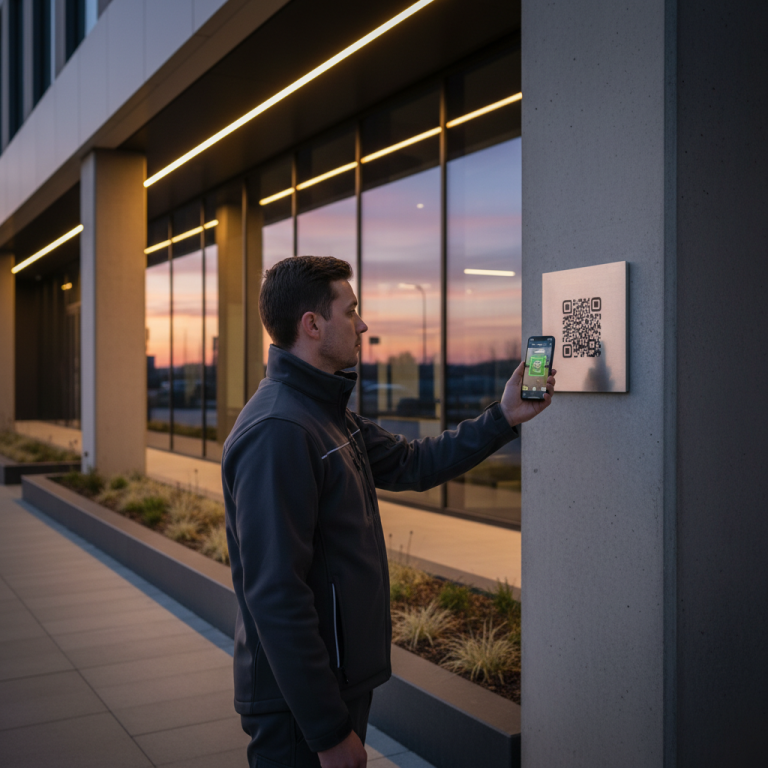
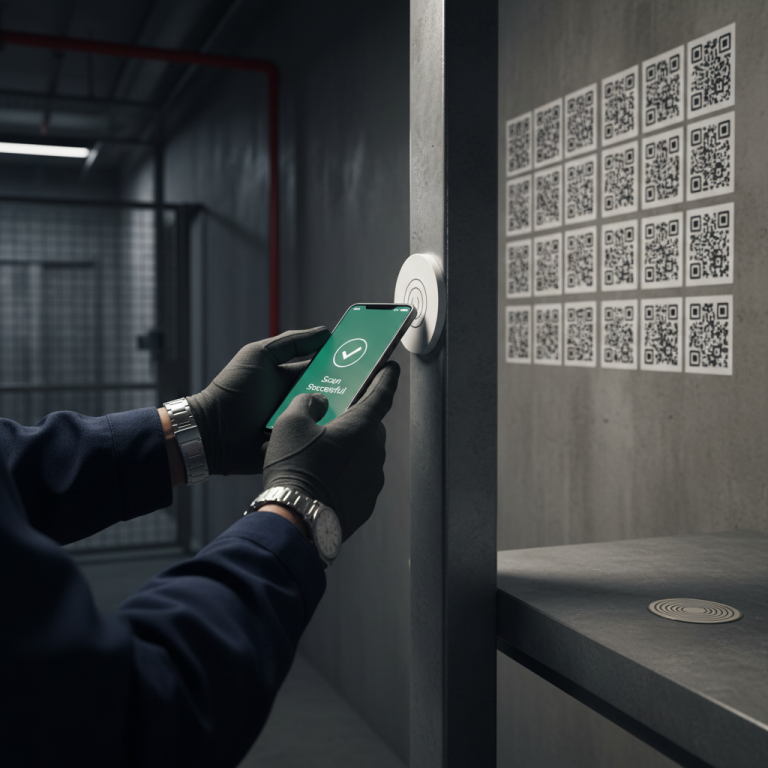
Today, we use Guard Tour Systems. This is the category our product falls under. They use physical checkpoints and a scanner to provide undeniable proof of presence. The two main technologies are QR codes and NFC tags.
- QR Codes: These are barcodes a guard scans with the camera of a smartphone. They are cheap to print and easy to deploy.
- NFC Tags: Near Field Communication tags are small, durable plastic discs that a guard taps with a smartphone. They are more robust than paper QR codes and work without needing the camera, which is great for dark or low-light conditions. You can read more on the differences in our QR code vs NFC patrol guide.
When a guard scans a checkpoint, the information (Guard ID, Checkpoint ID, Time, GPS Location) is sent to a cloud server in real time. As a manager, I can sit in my office and see a guard’s patrol progress live on a map. If a checkpoint is missed, I get an immediate alert. This moves the conversation from “Did you do the patrol?” to “Why was checkpoint 7 missed at 2:15 AM?”. It’s a complete shift in accountability.
Frequently Asked Questions
What is the main purpose of security patrolling?
The main purpose of security patrolling is to proactively protect a property through visible presence. This serves to deter potential offenders, detect any security or safety issues such as breaches or hazards, and provide a rapid, on-site response to any incidents that may occur.
What are the two main types of patrolling?
The two main types of patrolling are foot patrols and vehicular patrols. Foot patrols are used for detailed inspection of smaller areas or building interiors, while vehicular patrols use cars or carts to cover large geographical areas like campuses or industrial parks quickly.
What makes a security patrol effective?
An effective security patrol is defined by its unpredictability, thoroughness, and verifiable execution. Using random patterns, ensuring the guard is well-trained in observation, and employing a guard tour system to verify checkpoint visits are all key components that make a patrol truly effective.
How do you monitor security guard patrols?
Modern security guard patrols are monitored using patrol management software. Guards carry smartphones to scan QR code or NFC checkpoints along their route. This data, including timestamps and GPS location, is uploaded live to a cloud dashboard, allowing supervisors to track progress instantly, receive alerts for missed checkpoints, and ensure full compliance.
What is a patrol checklist in security?
A patrol checklist is a list of duties and checks a security guard must perform before, during, and after their patrol. It includes checking equipment, reviewing the route, observing for irregularities, documenting incidents, and formally handing over duties to the next shift, ensuring consistent and thorough performance.
Can a security guard patrol private property?
Yes, a security guard can and often does patrol private property with the owner’s permission. This is a primary function for security services in residential communities, corporate campuses, factories, and retail locations. Their authority is limited to enforcing the property owner’s rules and reporting criminal acts to the police.
Bottom Line
Security guard patrolling is the single most important proactive function a security team performs. It moves them from a passive, stationary force to an active, intelligence-gathering network that covers your entire property. It is the real work of physical security, transforming guards from a simple cost item into a genuine asset that protects people and property.
But this function is only as good as its verification. Relying on trust and paper is a recipe for failure. By using modern tools to ensure patrols are done correctly and on time, you are not just buying technology; you are buying certainty. See how we build that certainty with a 15-day free demo for one guard and one site (no card required). See our plans and pricing.