Quick Answer
Choosing between a QR code vs NFC guard patrol system depends on specific operational needs and environmental factors. Both technologies facilitate efficient checkpoint logging and monitoring, but NFC generally offers slightly faster scans and greater resistance to damage, while QR codes are more universally accessible and cost-effective to deploy. Implementing the right system can significantly enhance security accountability and streamline patrol management for security personnel.
Key Facts
- Over 80% of security companies globally are adopting digital patrol systems.
- NFC scanning typically completes within 0.1-0.5 seconds, faster than most QR code scans.
- QR codes are visible and readable by any smartphone camera, making them highly accessible for patrol staff.
- Approximately 65% of device-related patrol issues stem from damaged or unreadable tags.
- The initial setup cost for NFC tags can be 30-50% higher than for QR code tags.
When you’re setting up a modern guard patrol system, one of the first questions that comes up is about checkpoint technology: do you go with QR codes or NFC? Both QR codes and NFC (Near Field Communication) are effective ways for security guards to log their presence at specific locations, but they have distinct differences in how they work, their costs, and their practical application in the field. Ultimately, the ‘better’ choice depends on your specific operational needs, existing infrastructure, and budget.
Understanding the Basics: How QR and NFC Work in Patrols
Let’s start with a quick primer on how each technology functions in a guard tour system. We’ve deployed thousands of checkpoints using both, so we understand their real-world nuances.
What is QR Code Guard Patrol?
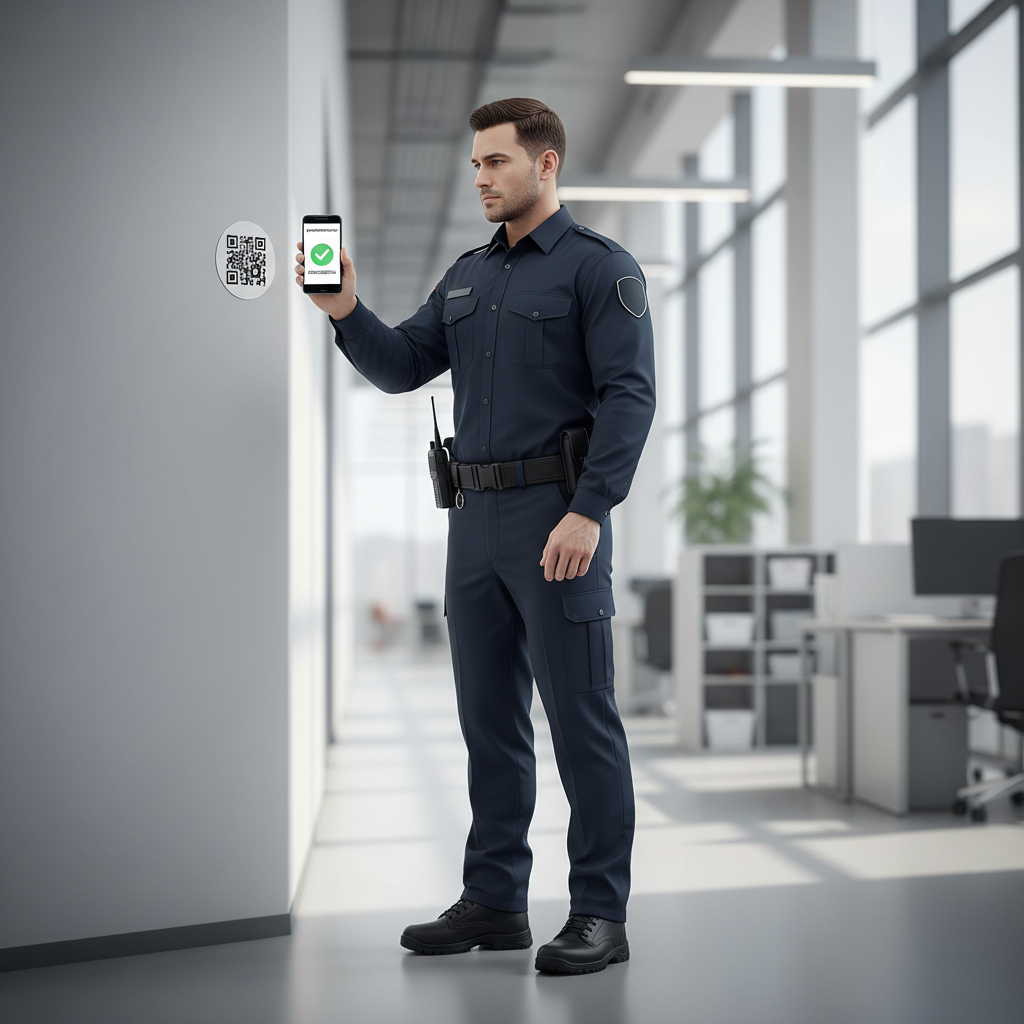
- QR Codes: A Quick Response code is a type of matrix barcode, essentially a square grid of black and white pixels. For guard patrols, you print these codes and affix them at various checkpoints. Guards use their smartphone camera and our guard patrol app to scan the code. The app reads the unique data embedded in the QR code, timestamping the scan and recording the guard’s location. It’s simple, visual, and highly accessible because almost every modern smartphone has a camera.
What is NFC Guard Patrol?
- NFC Tags: Near Field Communication tags are small passive radio devices. Think of them like the chips in your credit card or transit pass. You place these NFC tags at checkpoints. Guards then tap their NFC-enabled smartphone (or a dedicated NFC reader) against the tag. This tap triggers the app to register the checkpoint, timestamp it, and log the location. It’s a ‘tap-and-go’ experience, which feels very intuitive.
Cost Comparison: Initial Setup and Ongoing Expenses
For many security companies, especially startups or those managing tight budgets, cost is a major deciding factor. Let’s break down where your money goes with each option.
QR Code Costs
- Low Initial Cost: This is where QR codes shine. You just need to print them. We’re talking pennies per code if you print them yourself on sturdy, weather-resistant material. You can even print them on adhesive labels.
- No Special Hardware: Your guards already have smartphones with cameras, so there’s no additional hardware investment for scanners.
- Replacement Costs: If a QR code gets damaged or peeled off, printing a new one is cheap and fast.
NFC Tag Costs
- Higher Initial Cost: NFC tags are small electronic components. They cost more per unit than printed QR codes. Typically, a basic NFC tag can range from ₹10-₹50 (approx. $0.15-$0.60 cents USD) each, depending on type, durability, and bulk purchasing. For a large site with hundreds of checkpoints, this adds up quickly.
- NFC-Enabled Phones: While most modern smartphones (especially Android) come with NFC, older models or some budget phones might not. You need to ensure your guards’ devices are compatible. If not, you might need to upgrade phones or provide dedicated NFC readers, which adds to the cost.
- Installation/Replacement: While still easy to replace, the unit cost is higher if a tag is damaged or stolen.
Durability and Environmental Factors
Guards patrol in all sorts of environments, from dusty construction sites to rainy industrial perimeters. How well do these technologies hold up?
QR Code Durability
- Vulnerable to Damage: Since QR codes are printed, they can get scratched, faded by sun, obscured by dirt, or damaged by moisture. A severely damaged QR code becomes unreadable.
- Protection is Key: We always recommend laminating QR codes or placing them inside clear, protective casings to extend their lifespan, especially for outdoor checkpoints.
- Environmental Sensitivity: Glare from sunlight or poor lighting can sometimes make QR code scanning difficult for the phone camera.
NFC Tag Durability
- Highly Durable: NFC tags are generally much more durable. The chip is usually encased in plastic, epoxy, or even glass, making them resistant to dirt, dust, water, and direct physical impact. Industrial-grade NFC tags can withstand extreme temperatures and harsh chemicals.
- Less Affected by Environment: Since it’s a radio signal, NFC isn’t affected by lighting conditions, glare, or minor surface dirt on the tag.
- Concealment: NFC tags can be embedded within walls, under paint, or behind non-metallic surfaces, making them discreet and less prone to vandalism.
Ease of Use and Speed
Guard efficiency is critical. A system that’s clunky or slow will frustrate guards and lead to missed checkpoints.
QR Code User Experience
- Point and Shoot: Guards simply open the app, point their camera at the QR code, and it scans. It’s a familiar action for anyone who uses a smartphone.
- Learning Curve: Nearly zero learning curve.
- Potential for Delay: Sometimes, especially in low light or if the code is slightly damaged, finding the right angle and focus can take a few extra seconds.
NFC Tag User Experience
- Tap and Go: This is generally faster and feels more futuristic. Just tap the phone near the tag, and it registers instantly. There’s no aiming or focusing required.
- Learning Curve: Also very low. People are used to tapping for payments or door access.
- Reliability: The tap is very reliable once the phone is in range, offering quick and consistent checkpoint logging.
Security and Fraud Prevention
A core reason for a guard patrol system is to ensure accountability and prevent false reporting. Both technologies have their strengths and weaknesses here.
QR Code Security
- Reproducible: QR codes are just images. Anyone can take a photo of a QR code, print it, and potentially use that copy to
At a Glance
Feature Basic Pro Enterprise Tag Cost Low (QR) Medium (QR/NFC) Medium-High (NFC) Scan Speed Good Very Good Excellent Durability Moderate Good Excellent Reader Requirement Smartphone Camera NFC-enabled Device NFC-enabled Device Data Security Standard Encryption Enhanced Encryption Enterprise-Grade Encryption Frequently Asked Questions
What is the main difference between QR code and NFC for guard patrol?
The main difference is the scanning method: QR codes use optical scanning via a camera, while NFC uses close-proximity radio frequency for data exchange. NFC generally offers faster, tap-to-scan functionality without needing precise alignment.
Which system is more cost-effective for a guard patrol system?
QR code patrol systems are typically more cost-effective due to lower tag manufacturing costs and the widespread availability of smartphone cameras as readers. NFC tags and compatible readers can incur higher initial expenses.
Is a QR code patrol system reliable in different weather conditions?
QR code systems can be reliable, but their performance may degrade in extreme weather conditions like heavy rain or poor light, which can obscure the code or impact camera visibility. NFC systems are generally less affected by such environmental factors.
How does a guard patrol monitoring system improve security management?
A guard patrol monitoring system improves security by providing real-time tracking of patrol routes, ensuring checkpoints are visited, and instantly logging incidents. This enhances accountability, reduces human error, and provides verifiable data for audits.
What features should I look for in a guard patrol app?
Look for features such as real-time tracking, incident reporting, GPS location stamps, offline mode capabilities, customisable patrol routes, and comprehensive reporting tools. User-friendliness for guards is also a critical factor.
Can both QR and NFC systems be integrated into an existing guard tour patrol system?
Yes, many modern guard tour patrol systems are designed with flexibility, allowing integration of both QR code and NFC scanning technologies. This enables organisations to leverage the benefits of each for different operational needs or locations within a single system.