Quick Answer
Security guard tracking apps work by leveraging GPS, NFC, or QR code scanning to monitor patrol routes, record checkpoints, and log incidents in real-time. These apps ensure accountability by providing verifiable timestamps and location data for each guard activity. They streamline operations by offering features like digital incident reporting, task management, and instant communication, allowing supervisors to oversee security personnel efficiently and respond promptly to any issues that arise during patrols.
Key Facts
- Over 66% of security firms are adopting digital tracking solutions.
- GPS tracking provides real-time location data with an accuracy of up to 5 meters.
- QR code scanning records patrol checkpoints with a near 100% verification rate.
- Incident reporting through apps significantly reduces response times by up to 30%.
- Cloud-based data storage ensures patrol logs are accessible for up to 7 years for compliance.
Security guard tracking apps work by using a combination of technologies to monitor, manage, and report on the activities of security personnel in real-time. Essentially, they turn a standard smartphone into a powerful tool for patrol management, incident logging, and communication, giving security company owners and operations managers a live dashboard view of their guard force. This allows for improved accountability, better operational insights, and quicker responses to incidents.
The Core Technologies That Power Tracking Apps
When we built GuardPatrolling, we looked at what truly enables effective guard tracking. It’s not just one thing; it’s a blend of several proven technologies working together. Let’s break down the main components.
GPS for Location Tracking
Firstly, almost every modern security guard tracking app relies on GPS (Global Positioning System). Most smartphones today have very accurate GPS capabilities. This allows us to:
- Real-time location: See where your guards are at any given moment on a map. This is crucial for dispatching the nearest guard to an incident or verifying patrol routes.
- Geo-fencing: Set up virtual boundaries around specific properties or areas. If a guard enters or leaves a designated zone, the system can trigger alerts. We use this extensively for ensuring guards stay within their assigned patrol areas.
- Historical data: All GPS movements are logged, creating a detailed historical record of where and when a guard was at a particular location. This is invaluable for incident investigations or proof of service for clients.
From our experience, GPS is the backbone, but it’s not enough on its own. For precise checkpoint verification, we need something more.
NFC and QR Codes for Checkpoint Verification
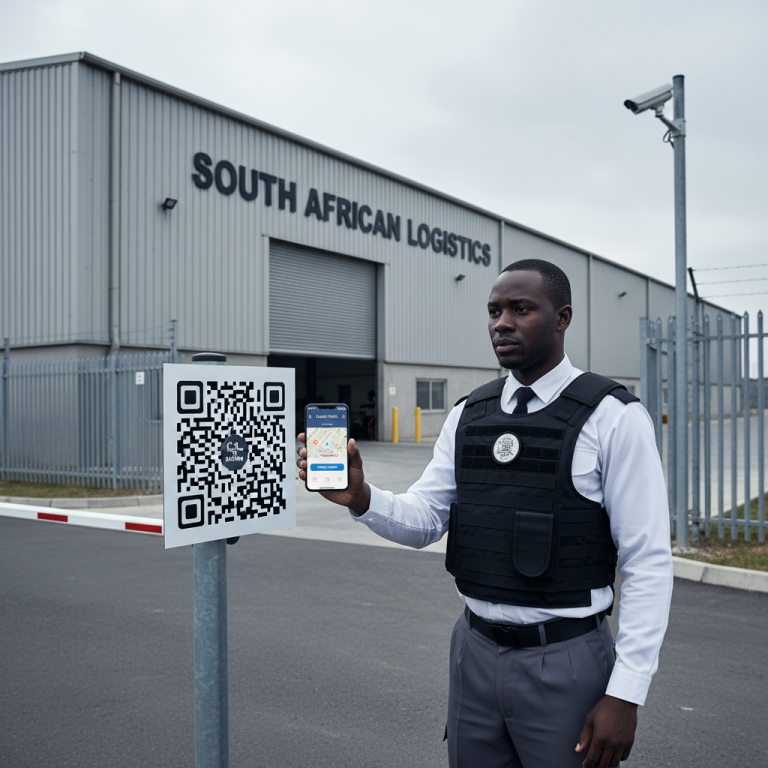
This is where NFC (Near Field Communication) and QR codes come into play. While GPS tells you the general area, NFC tags and QR code checkpoints tell you a guard was at a specific spot at a specific time. Here’s how it works:
- Deployment: We deploy small, inconspicuous NFC tags or print QR codes at strategic locations on a property – entry gates, critical equipment, specific rooms, perimeter points.
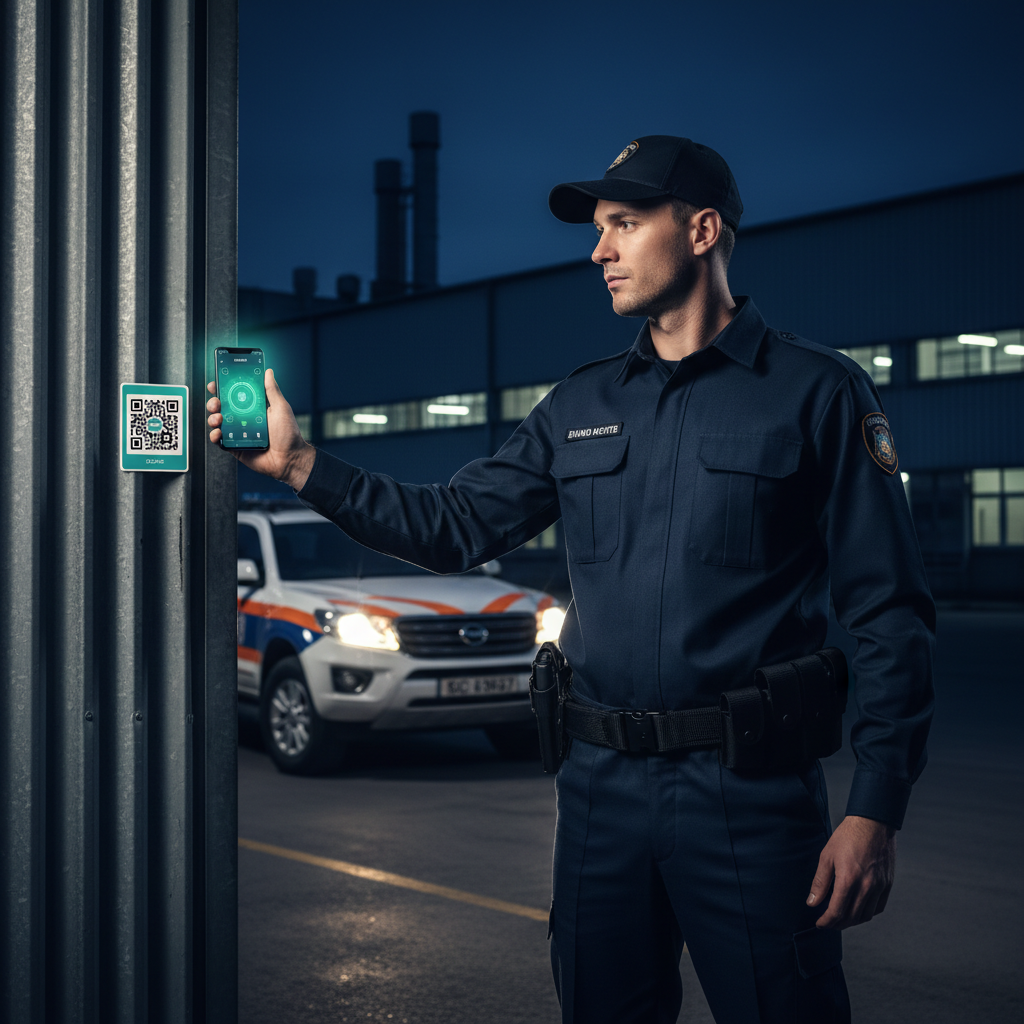
- Scanning: Guards use their smartphone app to scan these tags or codes as they pass them during their patrol. This acts as an electronic ‘punch-in’.
- Timestamping: Each scan is automatically timestamped and logged, providing irrefutable proof that a guard visited that exact location at that exact time. This granular detail is impossible with just GPS alone.
We’ve found a good balance of GPS and these physical checkpoints offers the best of both worlds. We’ve even written a whole post comparing QR code vs. NFC vs. RFID if you want a deeper dive.
Incident Reporting and Communication Tools
Beyond tracking, a good app is a communication hub. Guards need to report issues as they happen:
- Live incident reporting: Guards can log incidents (vandalism, suspicious activity, broken equipment) directly from their phone with photos, videos, and detailed notes. This data is instantly available to managers.
- Panic button: For emergencies, a discreet panic button can alert supervisors immediately, sending their location and an urgent message.
- Two-way communication: The app often includes secure messaging features, allowing guards to communicate with supervisors or other guards without relying on personal numbers or walkie-talkies.
This real-time reporting capability is where we see the biggest operational impact. Issues get addressed faster, and nothing slips through the cracks.
How Data Flows and is Used
So, all this data – GPS points, checkpoint scans, incident reports – where does it go and how do you access it?
Cloud-Based Platform
All the data collected by the guard’s smartphone app is transmitted to a secure, cloud-based server. This is critical because it means:
- Accessibility: Managers can access the data from anywhere with an internet connection – their desktop in the office, a laptop at home, or even their own mobile device.
- Security: The data is typically encrypted and backed up, ensuring its integrity and availability.
- Scalability: Cloud platforms can easily handle a growing number of guards and checkpoints without needing expensive on-premise hardware updates.
Manager Dashboard and Reporting
The cloud platform then presents all this information in an intuitive manager dashboard. Think of it as your control center. Here, you can:
- Monitor live activity: See guards on a map, check their patrol progress, and view new incident reports as they come in.
- Review historical data: Generate reports on past patrols, incident trends, missed checkpoints, and guard performance. This is crucial for billing clients and proving service delivery.
- Schedule shifts: Many apps, including ours, allow you to schedule guard shifts and assign patrols directly through the platform.
- Set up alerts: Get instant notifications for critical events, like a guard missing a checkpoint, an alarm being triggered, or a panic button activation.
Benefits for Security Companies and Clients
Implementing a security guard tracking app isn’t just about replacing paper logbooks; it’s about fundamentally improving how you operate.
Improved Accountability and Transparency
With precise logs of movements and activities, there’s a clear record of every guard’s actions. This eliminates disputes with clients over service delivery and holds guards accountable for their duties. Clients appreciate the transparency that these systems bring.
Increased Efficiency and Productivity
Guards spend less time on manual paperwork and more time patrolling. Managers can optimize patrol routes and quickly reallocate resources based on real-time needs. We’ve seen companies reduce patrol times by up to 15-20% by using our system to streamline operations.
Enhanced Safety for Guards and Properties
Real-time tracking and panic buttons provide an extra layer of safety for guards, especially those working alone or in high-risk areas. Meanwhile, accurate reporting ensures that potential security threats on a property are identified and addressed quickly, reducing overall risk for clients.
Better Client Relations and Proof of Service
Being able to provide clients with detailed, automated reports of patrols, incidents, and all activities builds immense trust. You can show them exactly what they’re paying for, down to individual checkpoint scans and incident photos. We have clients who use our reports directly for their own compliance audits.
Choosing the Right Tracking App: What to Look For
Not all apps are created equal. When evaluating options, consider these points:
| Feature | Basic App | Advanced SaaS (like GuardPatrolling) |
|---|---|---|
| GPS Tracking | Yes | Yes, with geo-fencing & path optimization |
| NFC/QR Checkpoints | Basic scanning | Detailed reporting, timestamping, mandatory checkpoints |
| Incident Reporting | Text & photo only | Text, photo, video, custom fields, categorization |
| Live Monitoring Dashboard | Limited | Comprehensive, real-time map, alerts, analytics |
| Shift Scheduling | Manual integration | Integrated with patrol assignments |
| Offline Mode | No or limited | Full offline data collection, syncs when online |
| Client Reporting | Manual exports | Automated, customizable reports, client portals |
| Support | Email only | Phone, email, chat, dedicated account manager |
We believe in a comprehensive approach. Our security guard tracking software is designed to cover all these advanced areas, making it a true guard monitoring solution for modern security companies.
Frequently Asked Questions
How accurate is GPS tracking in these apps?
Modern smartphone GPS is quite accurate, usually within 5-10 meters in open areas. Inside buildings or in urban canyons, accuracy can decrease, which is why we combine it with NFC/QR checkpoints for precise indoor location verification.
Can guards use their own phones for the app?
Yes, most security guard tracking apps are designed to run on standard Android or iOS smartphones. This reduces hardware costs for security companies, as guards can often use their personal devices or company-provided budget smartphones.
What happens if a guard loses internet connection?
Good guard patrol apps, including ours, have an offline mode. Data like checkpoint scans and incident reports are stored locally on the device and automatically synced to the cloud once an internet connection is re-established. Patrols continue uninterrupted.
Is the data from these apps legally admissible?
Yes, the timestamped and geo-tagged data collected by these systems is generally considered strong evidence. It provides an objective record of events and patrols, which can be crucial in legal disputes or client audits.
How long is the data typically stored?
Storage duration varies by provider and plan. At GuardPatrolling, we offer flexible data retention policies, usually storing data for several months to years, which helps with long-term trend analysis and compliance requirements for our clients.
Can these apps integrate with other security systems?
Some advanced guard tracking apps offer API integrations with other security systems like alarm monitoring, access control, or even CCTV. This creates a more unified security management platform, though it often requires custom development or specific enterprise plans.
Boost Your Operations with a Smart Tracking System
The transition from manual processes to a smart security guard tracking app is a big step, but it’s one that consistently pays off through increased efficiency, better accountability, and stronger client relationships. We’ve seen first-hand how our clients have transformed their operations, moving from reactive fire-fighting to proactive security management.
If you’re looking to upgrade your security operations and give your team the tools they need to succeed, we invite you to explore what GuardPatrolling can do for you. Check out our pricing plans and discover all our features. We even offer a free trial, so you can see how it works for your patrols without any commitment.
At a Glance
| Feature | Basic | Pro | Enterprise |
|---|---|---|---|
| GPS Tracking | Limited | Standard | Advanced + Geofencing |
| QR/NFC Checkpoints | Yes | Yes | Yes |
| Incident Reporting | Basic Text | Photos + Text | Photos, Video, Voice + Text |
| Dispatch & Alerts | Email Only | SMS & Email | SMS, Email, Push, Call |
| Reporting & Analytics | Daily Logs | Detailed Reports | Customizable Dashboards + Trends |
Frequently Asked Questions
What is a security guard patrol system?
A security guard patrol system is a comprehensive solution that uses technology to monitor and manage security personnel during their patrols. It tracks their movements, confirms checkpoint visits, and records incidents, ensuring accountability and improving operational efficiency for security outfits.
How does a QR code patrol system enhance security?
A QR code patrol system enhances security by requiring guards to scan unique QR codes at designated checkpoints. This provides verifiable proof of presence at specific times and locations, eliminating manual log errors and ensuring patrols are conducted thoroughly and on schedule.
What are the key benefits of using a guard patrol app?
The key benefits of using a guard patrol app include improved accountability through real-time tracking, enhanced incident reporting capabilities, streamlined communication between guards and supervisors, and access to comprehensive data for performance analysis and compliance auditing, contributing to overall operational excellence.
Can a security guard tracking app integrate with existing systems?
Yes, many modern security guard tracking apps are designed to integrate with existing security management systems, CCTV networks, and access control solutions. This provides a unified platform for monitoring and managing various aspects of enterprise security operations, enhancing situational awareness.
What's the difference between GPS and QR code tracking in patrols?
GPS tracking offers broad area monitoring and real-time location updates of guards, useful for route adherence. QR code tracking, conversely, verifies exact presence at specific, pre-defined points, ensuring critical checkpoints are visited. Both methods contribute to a robust patrol monitoring system.
Is there a free security guard checkpoint system available?
While some basic free security guard checkpoint systems exist, they often come with limited features, user capacity, or support. For comprehensive functionality, reliability, and scalability required by professional security operations, investing in a paid, feature-rich tracking app is generally recommended.