Quick Answer
A guard patrol system UK is a comprehensive solution designed to monitor, manage, and verify the activities of security personnel across various sites within the United Kingdom. These systems typically integrate GPS tracking, RFID/NFC/QR code checkpoints, real-time incident reporting, and data analytics to optimize patrol efficiency, ensure accountability, and provide robust documentation for compliance and client reporting.
Key Facts
- Over 75% of UK security firms are projected to adopt digital guard patrol systems by 2025.
- QR code and NFC checkpoint systems reduce human error in patrol logging by up to 90%.
- Real-time incident reporting capabilities enhance emergency response times by an average of 30%.
- Cloud-based guard patrol systems can decrease operational costs for security businesses by 15-20% annually.
- GPS tracking in patrol systems provides irrefutable proof of presence, enhancing client trust and accountability.
A guard patrol system in the UK provides security companies with the tools to monitor their guards, ensure patrols are completed correctly, and gather incident reports efficiently. At GuardPatrolling.com, we’ve built our system to empower security firms across the UK with real-time tracking, digital incident reporting, and streamlined shift management.
Why UK Security Firms Need a Modern Guard Patrol System
For years, UK security companies relied on paper logbooks and manual check-ins. Those days are gone. Clients now expect transparency and verifiable proof of service. A modern guard patrol system isn’t just a nice-to-have; it’s essential for staying competitive and compliant.
Boosting Accountability and Transparency
- Proof of Presence: With QR/NFC checkpoints, we log exact times and locations our guards visit. No more “he said, she said.”
- Client Reporting: Generate automated reports showing exactly when patrols happened. Your clients get real-time updates and detailed summaries, building immense trust.
- Operations Oversight: From our dashboard, we can see every guard’s activity. If a checkpoint is missed, or a patrol is delayed, we know instantly.
Improved Incident Management
When an incident occurs, time is critical. Our system allows guards to report incidents from their mobile phones, including photos and audio. This means:
- Faster Reporting: Incidents are logged in seconds, not hours.
- Richer Data: Pictures and detailed notes from the scene provide a clearer picture for follow-up.
- Instant Notifications: Operations managers are alerted instantly, allowing for quicker response and resolution.
Streamlining Operations and Reducing Costs
Moving from manual processes to digital saves money and time. Think about the costs associated with paper forms, manual data entry, and phone calls to verify patrols. Our software automates much of this, allowing your team to focus on security, not paperwork.
Key Features of an Effective Guard Patrol System for the UK Market
When we designed GuardPatrolling.com, we focused on features that truly make a difference for UK security firms. Here’s what matters:
QR/NFC Checkpoints for Proof of Presence
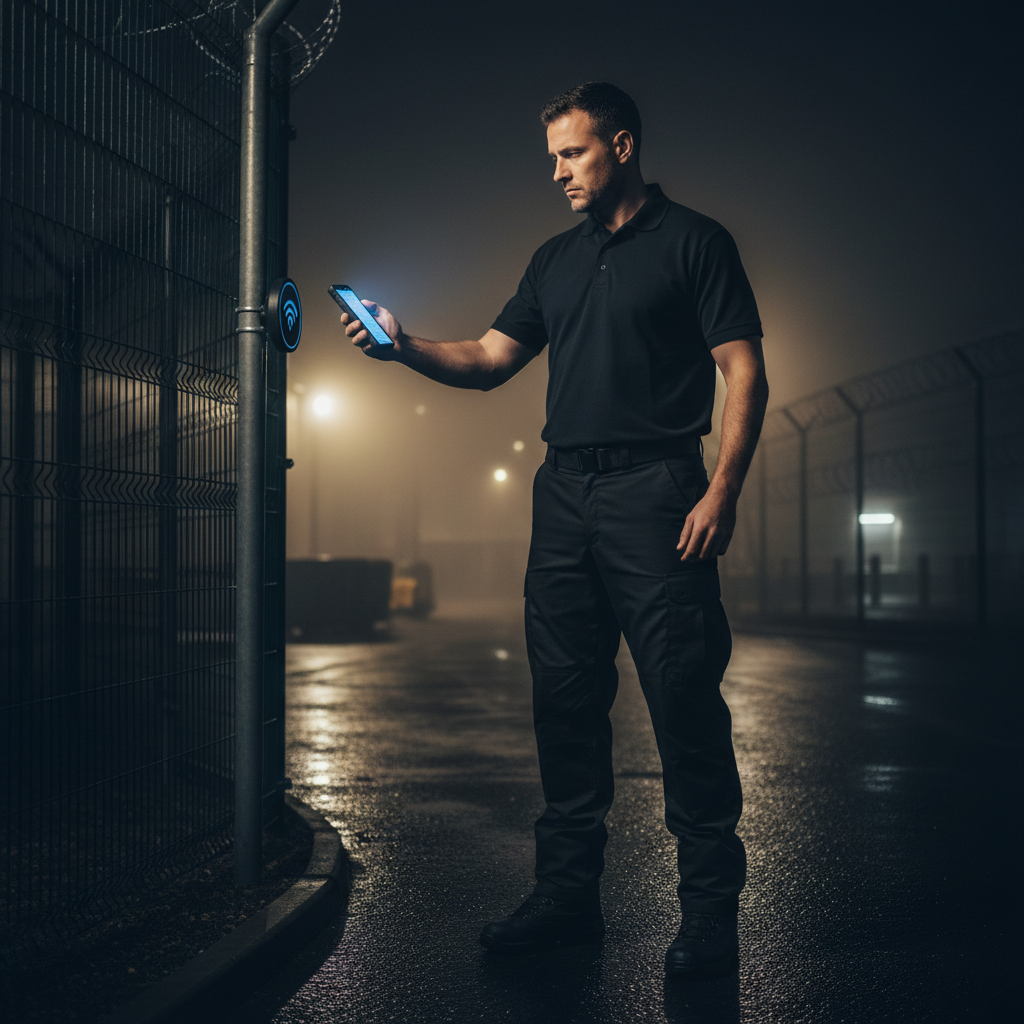
This is the backbone of our patrol verification. We deploy weatherproof QR/NFC tags at key locations on a site. Guards simply scan them with their smartphone app. This logs:
- Time and Date
- GPS Location
- Guard ID
This data is instantly uploaded to our cloud platform, giving you real-time visibility. It’s far more reliable than old-school key fobs or expensive hardware. You can read more about the differences in technologies in our post QR Code vs NFC vs RFID.
GPS Tracking and Geofencing
Beyond checkpoints, we use GPS tracking to see our guards’ movements during their shifts. This isn’t about micromanagement; it’s about safety and efficiency. If a guard deviates from a planned route or stays too long in one spot, we can investigate. Geofencing also helps ensure guards remain within designated patrol areas.
Real-Time Incident Reporting (from Mobile)
Our mobile app is more than just a scanner. Guards can log detailed incident reports, complete with photos, videos, and voice notes. This information is available immediately to supervisors and clients, enabling rapid response and informed decision-making.
Shift Scheduling and Management
Coordinating patrols across multiple sites and guards can be a nightmare. Our system includes tools for creating schedules, assigning shifts, and communicating with guards. We also handle time-off requests and ensure proper staffing levels are maintained.
Client Portal and Automated Reporting
One feature our UK clients love is the client portal. We can give our corporate clients direct access to view patrol reports, incident logs, and even real-time guard locations (if you permit it). This level of transparency truly sets a security firm apart. It’s a huge competitive advantage.
Comparing GuardPatrolling.com to Other UK Guard Patrol Systems
When you’re looking for a guard patrol system in the UK, you’ll find several options. We built GuardPatrolling.com from the ground up to be user-friendly, feature-rich, and affordable for security firms of all sizes. Here’s a quick comparison:
| Feature | GuardPatrolling.com | Traditional Competitor A | Budget Option B |
|---|---|---|---|
| QR/NFC Checkpoints | Yes | Yes (often proprietary hardware) | Basic (QR only, less reliable) |
| Real-time GPS Tracking | Yes | Yes | Limited/Delayed |
| Mobile Incident Reporting (photos, audio) | Yes | Yes | Often text-only |
| Client Portal | Yes | Some offer | No |
| Offline Mode | Yes | Yes | No |
| Setup Complexity | Low (App + Tags) | Medium (Hardware install) | Low |
| Pricing Model | Subscription per guard | Per guard + Hardware costs | Basic monthly fee |
| UK Support | Yes | Often international | Limited |
You can see more details of our offering on our features page.
Implementing a Guard Patrol System in Your UK Security Company
We understand that adopting new technology can feel like a big step. We’ve made our implementation process as simple as possible.
Initial Setup and Configuration
- Account Creation: Sign up for an account on GuardPatrolling.com.
- Site & Checkpoint Mapping: Use our web panel to map out your client sites and virtually place QR/NFC checkpoints. This can be done with floor plans or just by dropping pins on a map.
- Guard Onboarding: Add your guards to the system. They download our free app to their existing Android or iOS smartphones.
- Tag Deployment: Print out our QR codes (or order NFC tags from us) and deploy them at the marked checkpoints on your client sites.
Training Your Guards
The GuardPatrolling.com app is designed to be intuitive. Most guards pick it up in minutes. We provide simple video tutorials and guides. The key is to show them how easy it is to scan, report incidents, and manage their shifts.
Regular Use and Reporting
Once deployed, your operations managers will have a real-time view of all activities. Set up automated reports to be sent to your clients daily, weekly, or monthly. Pro-tip: show potential clients a demo of your system during sales pitches. It makes a huge difference in closing deals.
Our Experience with Guard Patrol Systems in UK Deployments
We’ve worked with numerous security companies across the UK, from small local firms in the Midlands to larger operations in London. What we’ve consistently heard is that visibility and accountability are paramount. For example, one client managing corporate offices in Manchester saw a 40% reduction in client complaints after deploying our system because every patrol was verifiable. Another in Glasgow improved incident response times by 60% by adopting real-time incident reporting with photos. You can generally tell the value of a system by how it performs in live, challenging environments. Our security guard tracking software is built for this.
Frequently Asked Questions
What is the best guard patrol system in the UK?
The “best” system depends on your specific needs, but for most UK security companies, a cloud-based solution like GuardPatrolling.com that offers real-time QR/NFC scans, GPS tracking, and comprehensive incident reporting is ideal. We focus on ease of use, affordability, and powerful features.
How much does a guard tour system cost in the UK?
Costs vary significantly. Traditional systems with proprietary hardware can have high upfront costs (hundreds to thousands of pounds per device) plus monthly fees. Modern software-as-a-service (SaaS) systems like ours typically charge a monthly subscription per guard or per site, starting from as low as £10-£20 per guard. This avoids large capital expenditure. See our prices page for more details.
Can I track my security guards in real-time in the UK?
Yes, absolutely. A good guard patrol system for the UK market includes real-time GPS tracking capabilities via the guard’s smartphone. This allows operations managers to see their guards’ locations on a map, verify routes, and respond quickly in emergencies. Our system updates locations every few seconds.
Do I need special hardware for a guard patrol system?
With GuardPatrolling.com, no special hardware is needed beyond the guards’ existing smartphones (Android or iOS). We use QR codes and NFC tags for checkpoints, which are very inexpensive and easy to deploy. This keeps your costs down and avoids proprietary lock-in.
How does a guard patrol system help with compliance in the UK?
Guard patrol systems provide undeniable proof of service, which is crucial for compliance with client contracts and industry standards. Detailed logs of patrols, incidents, and guard activity create an audit trail that can be invaluable for legal situations, insurance claims, or internal investigations. It removes all doubt about service delivery.
Is a guard patrol system hard to set up and use for a small UK security company?
Not at all, especially with modern SaaS solutions. GuardPatrolling.com is designed for rapid deployment. You can literally set up your first site and have guards patrolling within an hour. The mobile app is intuitive, and our web dashboard is straightforward for management. We provide all the necessary support to get you going.
Implementing a modern guard patrol system is no longer an optional upgrade; it’s a fundamental requirement for any security firm looking to thrive in the UK market. Our team at GuardPatrolling.com built this system because we saw the need for a practical, effective, and affordable solution. Ready to see the difference it can make for your operations? We offer a free trial so you can experience it firsthand. Check out our detailed pricing and features to get started today.
At a Glance
| Feature | Basic | Pro | Enterprise |
|---|---|---|---|
| Checkpoints | QR/NFC | QR/NFC, Bluetooth BEACON | QR/NFC, Bluetooth BEACON, GPS |
| Reporting | Standard PDF Logs | Customizable Reports, API Access | Advanced Analytics, BI Integration |
| Live Monitoring | Basic GPS Tracking | Real-time GPS + Incident Alerts | Geo-fencing, Lone Worker, Live Video |
| User Accounts | Limited (10 guards) | Moderate (50 guards) | Unlimited |
| Mobile App | Basic Patrol Features | Incident Reporting, Check-in/out | Offline Mode, Task Management, Biometrics |
Frequently Asked Questions
What is a guard patrol system and how does it work in the UK?
A guard patrol system in the UK is a digital solution that tracks and verifies security guard activities. It uses mobile apps and QR/NFC checkpoints at various locations, recording timestamps and location data when guards scan them. This creates an unalterable log of patrols, ensuring accountability and providing real-time oversight for security management.
What are the benefits of using a QR code patrol system for security companies?
QR code patrol systems offer significant benefits, including enhanced accuracy in recording patrol routes and times, reduced paperwork, and real-time incident reporting. They improve accountability by providing verifiable proof of presence and allow for quick deployment without specialized hardware, making them cost-effective for UK security firms.
How does a guard patrol monitoring system improve security operations?
A guard patrol monitoring system significantly improves security operations by providing real-time visibility into guard movements and activities. It alerts supervisors to missed checkpoints or incidents immediately, enabling quicker responses. This proactive approach helps prevent security breaches and ensures compliance with client service level agreements.
Can a guard patrol app be integrated with existing security infrastructure?
Many modern guard patrol apps are designed for seamless integration with existing security infrastructure, including CCTV, access control systems, and alarm panels. This allows for a unified security management platform, improving data flow and operational efficiency across different security components within a UK firm.
What features should I look for in a guard patrol system software for UK businesses?
When choosing guard patrol system software for UK businesses, look for features like GPS tracking, QR/NFC checkpoint scanning, real-time incident reporting, customisable reporting, lone worker protection, and a user-friendly mobile app. Cloud-based accessibility and robust data security are also crucial for reliable operation and compliance.
What is the typical price range for a guard patrol system in the UK?
The price of a guard patrol system in the UK varies widely based on features, number of guards, and scale of deployment. Basic cloud-based systems can start from as low as £20-£50 per guard per month, while enterprise-level solutions with advanced analytics and integrations can range from £100-£300+ per month, often with setup fees.


