Quick Answer
QR code patrol guard accountability refers to using scannable QR codes placed at various checkpoints to verify and document a security guard’s presence and activities during their rounds. This system enhances transparency, ensures guards follow designated patrol routes and schedules, and provides real-time data for supervisors, significantly improving oversight and operational efficiency in security management.
Key Facts
- 90% of security companies report improved patrol compliance with digital tracking systems.
- Real-time alerts notify supervisors of missed checkpoints or deviations within seconds.
- Data analytics from QR code scans provide insights into patrol duration and guard performance.
- Reduced human error and manual log-keeping significantly streamline operations.
- Quick implementation of QR code systems can be achieved within 2-3 days for most sites.
QR code patrol guard accountability means using scannable QR codes at various checkpoints to verify a security guard’s presence and actions in real-time. By scanning these codes with a smartphone, guards confirm their visit, timestamping their arrival and departure, and even reporting incidents immediately. This system eliminates assumptions and paperwork, giving operations managers clear, verifiable data on every patrol.
The Problem with Traditional Patrol Systems
For years, we’ve relied on manual methods or outdated technology for guard patrols. Logbooks, paper reports, even costly proprietary devices – they all have shortcomings when it comes to true accountability. I’ve seen countless times how these systems create blind spots and operational headaches.
Paper Logbooks and Manual Reporting: A Trust-Only System
- Easy to Manipulate: It’s simple for someone to backdate an entry or just sign off without actually performing the patrol. We’re relying solely on trust, and while most guards are diligent, human error or shortcuts can happen.
- No Real-Time Visibility: If an incident occurs, you’d only know about it after the guard submits their report, which could be hours later. This delay is critical in security.
- Data Entry Errors: Transcription from paper to digital records is prone to mistakes, and it’s time-consuming for your administrative staff.
Older Guard Tour Systems: High Costs, Limited Flexibility
Before smartphones became ubiquitous, dedicated guard tour devices were the norm. These RFID or iButton systems offered some improvements, but they came with their own set of problems:
- High Upfront Investment: The hardware itself was expensive, and you needed a separate device for each guard. Replacement costs for lost or damaged devices added up quickly.
- Technology Lock-in: Often, these systems were proprietary, meaning heavy reliance on a single vendor for maintenance, updates, and expansions.
- Limited Functionality: Primarily for proof-of-presence, they lacked integrated incident reporting, multimedia capture, or advanced communication features that modern systems offer.
How QR Code Patrol Works for Accountability
The beauty of QR code systems lies in their simplicity and the powerful data they generate. It’s not just about scanning a code; it’s about building a digital, verifiable trail of every security action.
Setting Up Your Patrol Route with QR Codes
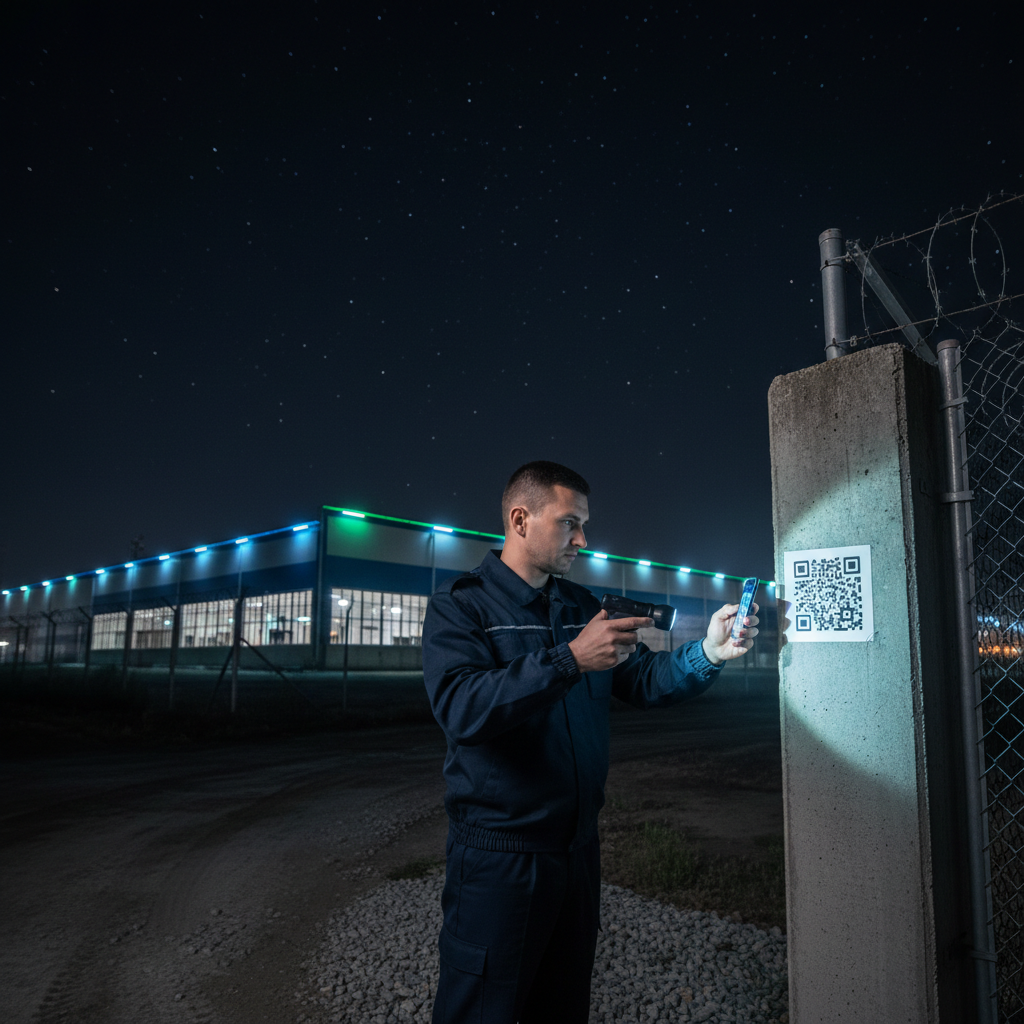
It starts with strategic placement. We help you identify critical checkpoints – entry points, sensitive equipment areas, emergency exits, perimeter fences. You then print and affix QR codes at these exact spots. Think of them as digital markers for your guard’s physical journey.
- Easy Deployment: QR codes are cheap to print and easy to place. No special wiring or power needed.
- Location Specificity: Each code is unique, tied to its exact location in our system. This tells you precisely where the guard was.
The Scanning Process: What Happens When a Guard Scans
Your guards use their existing smartphones (or company-issued ones) with our security guard tracking software. When they scan a QR code:
- Time & Location Stamp: Our app instantly records the exact time and GPS coordinates of the scan. This is your irrefutable proof of presence.
- Activity Reporting: Guards can be prompted to confirm the status of the area (e.g., ‘all clear’, ‘door locked’) or report an observation.
- Incident Reporting: If something is amiss, they can immediately open an incident report, add details, photos, and even videos from their phone. This real-time reporting is a game changer for rapid response.
Real-Time Dashboard for Operations Managers
This is where the accountability truly comes alive for you. From your office, or even home, you get a live feed of all patrol activities on our dashboard. No more waiting for end-of-shift reports.
- Live Patrol Tracking: See which guards are on duty, where they are, and which checkpoints they’ve visited.
- Missed Checkpoint Alerts: Get instant notifications if a guard misses a scheduled scan or deviates from the assigned route.
- Incident Management: All reported incidents appear instantly, allowing you to dispatch backup or escalate issues without delay.
This level of transparency changes operations. We’ve seen clients reduce their incident response times by over 50% because they get information so much faster.
Key Benefits of QR Code Patrol Guard Accountability
Beyond just knowing where your guards are, a well-implemented QR code system delivers tangible benefits that impact your bottom line and service quality.
Enhanced Operational Oversight and Efficiency
With real-time data, you can optimize routes, identify inefficiencies, and ensure your guards are deployed effectively. We often find that companies discover ‘dead zones’ or redundant checkpoints they weren’t aware of before.
Improved Compliance and Client Satisfaction
When you can provide clients with detailed reports showing exact patrol times and verified checkpoint visits, their confidence in your service skyrockets. This data-driven approach fulfills audit requirements and helps you prove your value. Our clients have reported winning new contracts specifically because of the transparent accountability our system provides.
Faster Incident Response and Resolution
This is perhaps the biggest security benefit. Imagine a broken fence or a suspicious vehicle. With instant reporting via QR scan, your team knows immediately and can act. Compare that to finding out next morning – the difference is huge for security. To learn more about various tracking options, you might want to read our article on guard monitoring software.
Reduced Administrative Burden
Say goodbye to manual data entry for patrol logs. Our system automates this, freeing up your managers and back-office staff to focus on more strategic tasks. I’ve personally seen managers get back 5-10 hours a week just from eliminating paperwork.
QR Code Patrol vs. Other Guard Tour Technologies
While QR codes offer significant advantages, it’s good to understand how they compare to older or alternative technologies. We’ve worked with many security companies transitioning from legacy systems, and this comparison is often at the core of their decision-making process. For a deeper dive, check out our post on QR code vs. NFC vs. RFID.
| Feature | QR Code Patrol | NFC/RFID Systems | Paper Logbooks |
|---|---|---|---|
| Cost of Checkpoints | Very Low (printable codes) | Moderate (tags/buttons) | Very Low (paper, pen) |
| Hardware Required for Guard | Standard Smartphone | Dedicated Reader or NFC-enabled Phone | Pen, Clipboard |
| Real-time Tracking | Yes | Yes (with connected reader) | No |
| Instant Incident Reporting | Yes (with photos/video) | Limited (text only) | No (delayed) |
| GPS Verification | Yes | Limited to device’s GPS | No |
| Deployment Speed | Fast | Moderate | Very Fast |
| Data Accuracy | High | High | Low (human error) |
Implementing QR Code Patrol: Our Experience
When we help security companies adopt QR code patrolling, we focus on a smooth transition and proper training. It’s not just about installing software; it’s about integrating it into your existing workflows and making sure your guards are comfortable with the new tools.
Training Your Security Team
This is crucial. We’ve learned that a simple, intuitive app makes all the difference. Our system is designed to be user-friendly, minimizing the learning curve. We provide resources and support to ensure your guards understand the benefits and can use the app effectively.
Integrating with Your Operations
QR code patrol should complement your existing security protocols, not complicate them. We work with you to map out routes, define checkpoint actions, and set up reporting templates that fit your specific needs. The goal is to enhance, not disrupt.
Scalability for Growing Businesses
One of the strongest advantages of a cloud-based QR code system like ours is its scalability. Whether you’re managing a small team at one site or hundreds of guards across multiple locations, the system can grow with you without significant hardware investments. When you’re ready to explore options, check out our best guard patrol system guide.
Frequently Asked Questions
H3: What is the main benefit of using QR codes for guard patrols?
The main benefit is real-time, verifiable accountability for guard presence and actions. You eliminate guesswork with exact timestamps and GPS locations for every checkpoint visit, and get instant incident reports.
H3: Can QR code patrol systems track guards outdoors?
Yes, absolutely. Our system uses GPS data from the guard’s smartphone along with the QR code scan to provide precise location tracking, even in outdoor environments or large perimeters.
H3: How secure are QR codes from being tampered with?
While a physical QR code can theoretically be damaged or removed, our system logs the scan location via GPS. If a code is scanned outside its expected location, this discrepancy is flagged. Additionally, physical tamper-resistant QR codes can be used, and multiple checkpoints ensure continuous verification.
H3: Do I need special equipment for QR code patrols?
No, that’s one of the biggest advantages. Guards use their existing smartphones (iOS or Android) with our app. You only need to print and place the QR codes at your desired checkpoints.
H3: What if a guard’s phone battery dies during a patrol?
This is a valid concern. We advise guards to start shifts with fully charged phones and carry power banks for long shifts. Our system also allows for manual check-ins (with supervisor approval) or fallback procedures to ensure no critical patrols are missed due to technical issues.
H3: Is it difficult to generate and manage many QR codes for large sites?
Not at all. Our platform makes it easy to generate unique QR codes for any number of checkpoints, link them to specific locations, and manage them centrally. You can group them by site or patrol route for simple administration.
Improving guard accountability doesn’t have to be complicated or expensive. A QR code patrol system gives you the clarity and control you need to run a tighter, more efficient, and more secure operation. If you’re looking to upgrade your guard patrol system and bring real accountability into your security business, we invite you to explore our features and see our transparent pricing plans. We’re confident that once you experience the difference, you won’t look back.
At a Glance
| Feature | Basic | Pro | Enterprise |
|---|---|---|---|
| QR Code Scan | Yes | Yes | Yes |
| Real-Time Alerts | Email/SMS | Email/SMS + App Notifications | Email/SMS + App Notifications + API Integration |
| Reporting & Analytics | Standard Daily/Weekly | Customizable Monthly | Advanced AI-driven Insights |
| Geo-fencing | Optional Add-on | Included | Included + Dynamic Zones |
| Visitor Management | No | Basic Integration | Full Biometric/ID Integration |
Frequently Asked Questions
How does a QR code patrol system improve security guard efficiency?
A QR code patrol system improves guard efficiency by automating attendance and checkpoint verification. Guards scan codes at locations, digitally logging their presence and time, which eliminates manual paperwork and provides immediate data for supervisors, leading to faster response times and better resource allocation.
What are the benefits of using a QR code system for guard patrolling?
Using a QR code system for guard patrolling offers numerous benefits, including enhanced real-time visibility into patrol activities, improved accountability for security personnel, automated report generation, and reduction in fraudulent reporting. It also streamlines incident reporting and helps in optimising patrol routes.
Can a QR code patrol system track a guard's exact location?
While scanning a QR code marks a guard’s presence at a specific checkpoint, advanced QR code patrol systems often integrate with GPS tracking. This allows for monitoring of a guard’s exact location between checkpoints, providing a comprehensive overview of their patrol route and ensuring adherence to planned pathways.
Is a free security guard checkpoint system sufficient for large organizations?
A free security guard checkpoint system is typically adequate for small businesses or for initial trials. However, large organizations require robust features like comprehensive reporting, real-time alerts, multiple user accounts, and dedicated support that are generally offered by paid, enterprise-grade guard patrol software, ensuring scalability and reliability.
How does a guard patrol monitoring system prevent false reporting?
A guard patrol monitoring system prevents false reporting through immutable digital timestamps and location data recorded upon each QR code scan. This objective data cannot be easily manipulated, providing verifiable proof of a guard’s presence and activity at specific checkpoints, increasing accountability and trust.
What is the average cost of implementing a QR code guard tour system?
The average cost of implementing a QR code guard tour system varies significantly based on features, scale, and provider. Basic systems can start from a low monthly subscription per guard, while enterprise-level solutions with advanced analytics and integrations can involve higher setup fees and recurring costs, depending on the asset count and customisation required.


