Quick Answer
A guard tour patrol system is a technological solution designed to monitor and manage security personnel’s movements, activities, and reporting during their rounds. It ensures accountability, verifies patrols are completed as scheduled, and provides real-time incident reporting, significantly enhancing overall security operations and compliance.
Key Facts
- The global security solutions market is projected to reach over USD 400 billion by 2027, with guard tour systems as a critical component.
- Implementing a modern guard tour patrol system can reduce security-related incidents by up to 25% through improved vigilance.
- QR code and NFC-based systems are prevalent, offering robust, tamper-proof checkpoint verification.
- Cloud-based guard patrol systems allow for remote monitoring and management from anywhere, enhancing operational flexibility.
- Integration with other security platforms, such as CCTV and access control, is a growing trend for comprehensive security management.
A guard tour patrol system is a technology solution designed to help security companies manage, monitor, and document the patrols of their security guards. It uses checkpoints (like QR codes or NFC tags), mobile apps, and a central dashboard to ensure guards are where they need to be, when they need to be, and provides real-time reporting for incidents and activities during their rounds.
Kya Hai Guard Tour Patrol System? (Understanding the Core)
At its heart, a guard tour patrol system is about accountability and efficiency. Traditionally, guards would use paper logbooks or manual clock-in systems. Imagine a guard patrolling a large factory or a sprawling corporate campus. How do you verify they’ve actually checked all the critical points – the loading docks, the server room entrance, the fire exits – on their rounds?
Modern guard tour systems replace these outdated methods with digital tools. Our team at GuardPatrolling.com, for example, built our system around three core components:
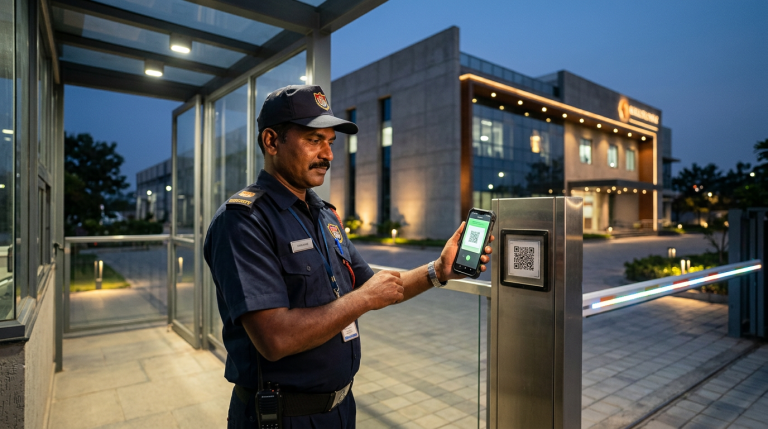
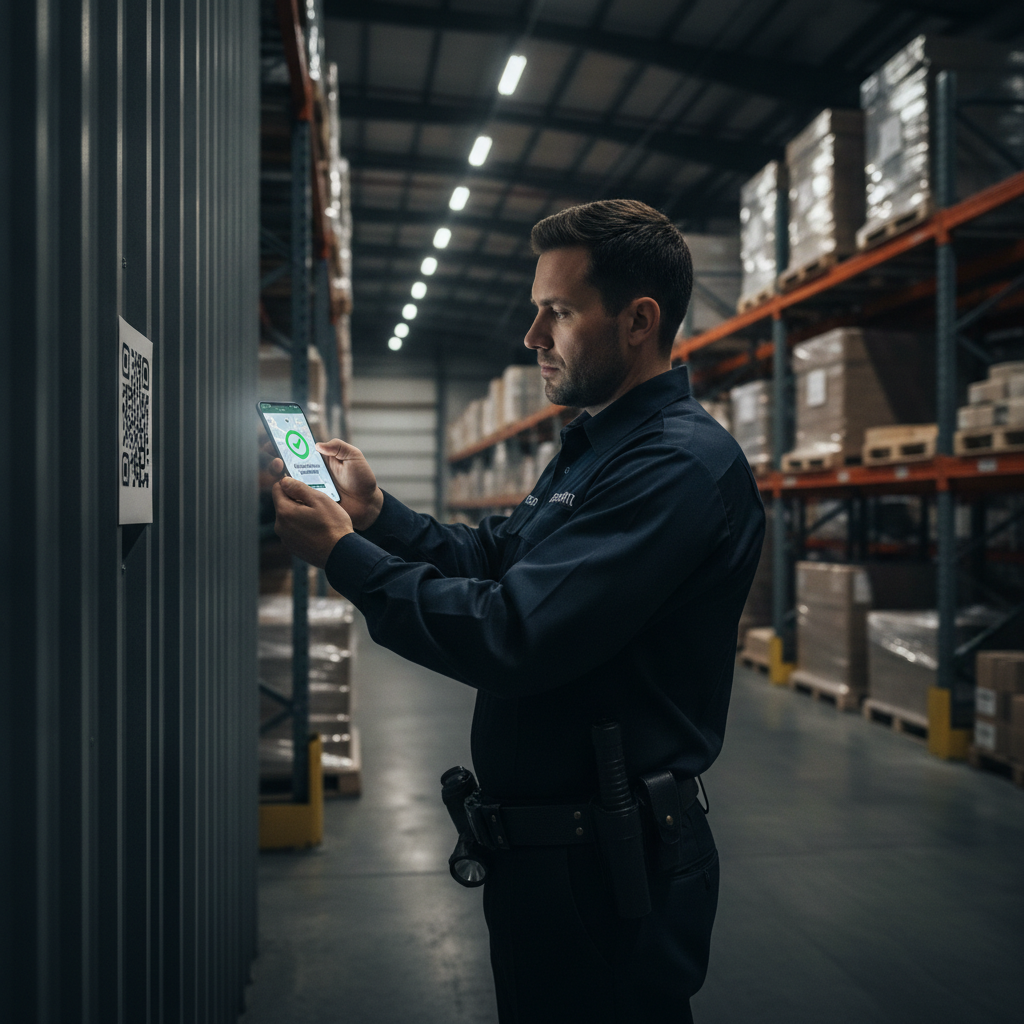
- Checkpoints: These are physical markers, usually QR codes or NFC tags, placed at specific locations along a patrol route. Guards scan these during their rounds.
- Mobile App: Guards use a smartphone app to scan checkpoints, report incidents (with photos and notes), and manage their tasks. This is where the real-time data collection happens.
- Web Dashboard: For supervisors and clients, this is the central hub. You see live guard locations, completed patrols, incident reports, and can generate comprehensive audit trails.
This setup means we get real-time visibility. No more ‘did they, didn’t they’ guesswork. You know exactly when and where a guard was at a specific checkpoint.
Why Guard Tour Systems Are Essential for Security Operations
Many security companies we work with initially come to us because they’re struggling with one of these issues:
Improving Guard Accountability and Supervision
Without a system, how do you prove a guard completed their patrol? Random spot checks? Manual reports that can be faked? A guard tour system provides undeniable evidence. Every scan is time-stamped and geo-located. If a patrol isn’t completed, or a checkpoint is missed, you know instantly. This radically improves accountability and makes supervision much easier. For more on this, check out our insights on security guard tracking software.
Enhancing Client Trust and Transparency
Clients are increasingly demanding proof of service. With a digital system, you can offer them access to a client portal or send automated reports detailing patrol completion, incidents, and guard activity. This level of transparency builds immense trust. When a client sees their guards are performing their duties diligently, their confidence in your services skyrockets.
Streamlining Incident Reporting and Response
Paper incident reports are slow and prone to errors. With a mobile app, guards can report incidents immediately, including photos, videos, and detailed notes. This real-time information allows for quicker response times and better documentation, which is crucial for investigations or insurance claims.
Optimizing Patrol Routes and Efficiency
Over time, the data collected can help you identify inefficiencies in patrol routes. Are guards spending too much time in one area and not enough in another? Are there redundant checkpoints? The insights from the system allow you to refine routes, ensuring optimal coverage with existing resources. We’ve seen companies reduce patrol times by 10-15% just by optimizing their routes based on data.
Choosing Your Guard Tour Patrol System: Key Features to Look For
Not all systems are created equal. When evaluating options, here’s what we recommend focusing on:
Checkpoint Types: QR, NFC, or GPS?
Most systems use physical checkpoints. We generally prefer QR codes and NFC tags for their simplicity and cost-effectiveness. GPS checkpoints are also an option, but they rely heavily on accurate GPS signals, which can be an issue indoors or in dense urban areas. Make sure the system supports the type of checkpoints that best suit your operational environment.
Real-time Monitoring and Alerts
This is non-negotiable. You need to see what’s happening NOW, not after the shift. The dashboard should show live guard locations, missed checkpoints, and new incident reports as they happen. Automated alerts (SMS, email) for critical events are also vital.
Comprehensive Reporting and Analytics
The system should generate detailed reports on patrols, incidents, activities, and attendance. Look for customizable reports that you can filter by guard, site, date, and incident type. Analytics can reveal trends, highlight problem areas, and help you make data-driven decisions.
Ease of Use (for Guards & Supervisors)
If the mobile app is complicated, guards won’t use it correctly. If the dashboard is clunky, supervisors won’t get the data they need. Look for intuitive interfaces, minimal training requirements, and good support documentation. We put a lot of emphasis on making our app super simple, because a guard’s job is already tough enough.
Offline Mode Capability
What happens when a guard is patrolling in an area with no internet? The app should be able to store data offline and sync it automatically once an internet connection is restored. This is a critical feature for continuity of service.
Deployment Options: Cloud vs. On-Premise
For almost all security companies today, cloud-based (SaaS) systems are the way to go. On-premise solutions require you to manage servers, backups, security, and updates yourself. Frankly, it’s a headache and very expensive.
Comparison: Cloud-based (SaaS) vs. On-Premise Systems
| Feature | Cloud-based (SaaS) | On-Premise |
|---|---|---|
| Initial Investment | Low (monthly subscription) | High (software license, hardware, setup) |
| Maintenance & Updates | Handled by vendor (automatic) | Your responsibility |
| Accessibility | Anywhere with internet | Limited to your network (or VPN) |
| Scalability | Easy to scale up/down | Requires hardware upgrades |
| Data Security | Vendor’s responsibility (shared) | Your full responsibility |
| Technical Expertise | Minimal required | High (IT staff needed) |
With a SaaS solution like GuardPatrolling.com, you get instant access, automatic updates, and we handle all the infrastructure. It simply makes more sense for most businesses.
Integration with Other Security Tools
Think about your existing ecosystem. Does the guard tour system need to integrate with your existing:
- Time and attendance software?
- HR system?
- Client billing?
- Dispatch software?
While deep integrations can be complex, having the ability to export data or integrate via APIs (Application Programming Interfaces) can save a lot of manual work. Discuss your specific integration needs with potential vendors early on.
Cost Considerations for Guard Tour Patrol Systems
Pricing for guard tour patrol systems varies widely. Most SaaS providers, including us, offer subscription-based models, typically priced per guard per month, or per site. Some might have tiers based on features or data storage.
- Subscription Fees: This is your primary ongoing cost. Make sure you understand what’s included in each tier.
- Setup & Onboarding: Some vendors charge for initial setup or training. We’ve designed our system to be straightforward to set up, and provide support as part of our package.
- Hardware Costs: If you need to buy specific NFC tags or ruggedized phones, factor that in. QR codes can be printed easily, keeping those costs minimal.
- Hidden Fees: Always ask about data overage charges, premium support costs, or any other ‘surprises’. Transparency in pricing is key. Our pricing page is designed to be very clear about this.
Remember, the cheapest system isn’t always the best. Factor in the long-term benefits and ROI (Return on Investment) from improved efficiency, accountability, and client satisfaction.
Implementation Best Practices: Getting Started with Your New System
Getting a guard tour system up and running smoothly requires a bit of planning:
- Pilot Program: Don’t roll it out everywhere at once. Start with one or two sites, or a small team. Gather feedback, address kinks, and refine your processes.
- Guard Training: This is critical. Guards need to understand not just HOW to use the app, but WHY it benefits them (e.g., streamlined reporting, better safety). Provide clear instructions and hands-on training.
- Clear Checkpoint Placement: Strategically place checkpoints at critical areas, but don’t overdo it. Too many can make patrols inefficient.
- Regular Reviews: Periodically review patrol data, incident reports, and system usage. Are guards using it consistently? Are there areas for improvement? This continuous feedback loop helps optimize the system’s value.
Frequently Asked Questions
Can I use my existing smartphones for a guard tour patrol system?
Yes, absolutely. Most modern guard tour systems, including GuardPatrolling.com, are app-based and run on standard Android or iOS smartphones. You don’t need proprietary hardware.
What if guards are patrolling in areas without internet connectivity?
A good guard tour system will have an offline mode. This means guards can continue to scan checkpoints and report incidents even without internet. The data is stored locally on their device and automatically syncs to the main dashboard once an internet connection is re-established. Always confirm this feature when selecting a system.
How accurate is the GPS tracking in these systems?
GPS accuracy depends on factors like device quality, environmental conditions (e.g., urban canyons, indoors), and network availability. While generally very good for outdoor tracking, don’t rely solely on GPS for indoor checkpoint verification. We find a hybrid approach with QR/NFC for specific points and GPS for general movement works best.
Is a guard tour system difficult to set up and manage?
Modern cloud-based systems are designed for ease of use. Setting up checkpoints (printing and placing QR codes) is straightforward. Configuring patrol routes and schedules on the dashboard is typically done via a user-friendly interface. Training guards on the mobile app is also quite quick due to intuitive design. Most companies can be up and running within a day or two for a smaller deployment.
Can clients get access to patrol reports and data?
Many systems offer client portals or automated report delivery features. This allows you to provide your clients with real-time or scheduled updates on patrol activities, incident reports, and proof of service, enhancing transparency and trust. You control what your clients see.
What is the typical ROI for investing in a guard tour patrol system?
The ROI can be significant. We’ve seen clients reduce missed patrols by over 90%, cut report generation time by 70%, and improve client retention by demonstrating superior service. The savings come from increased efficiency, reduced liabilities due to better documentation, and stronger client relationships. It’s not just a cost; it’s an investment in better operations. For more specific advantages, see our post on the best guard patrol systems.
Ready to Modernize Your Guard Patrols?
Implementing a guard tour patrol system isn’t just about technology; it’s about upgrading your entire operation to be more efficient, accountable, and transparent. We’ve seen firsthand the positive impact it has on security companies and their clients. If you’re looking to bring your guard patrols into 2026 and beyond, consider giving GuardPatrolling.com a try. We offer a free trial so you can experience the benefits yourself, with no hidden costs. Check out our pricing plans and features to see how we can help your security business thrive.
At a Glance
| Feature | Basic | Pro | Enterprise |
|---|---|---|---|
| Checkpoint Scanning | QR/NFC | QR/NFC/GPS | QR/NFC/GPS/BLE |
| Real-time Reporting | Basic Alerts | SMS/Email Alerts | Live Dashboard/Push Notifications |
| Incident Management | Manual Logging | Simple Forms | Customizable Workflows/Dispatch |
| Reporting & Analytics | Standard Reports | Configurable Reports | AI/ML-Driven Insights/Custom BI |
| User Accounts | 1-5 Guards | Up to 50 Guards | Unlimited Guards/Hierarchical Roles |
Frequently Asked Questions
What is a guard patrol system?
A guard patrol system is a technology solution used to track and verify the rounds performed by security guards. It ensures guards visit specific checkpoints at designated times, enhancing accountability and improving the efficiency of security operations through real-time data collection.
How does a QR code patrol system work?
A QR code patrol system uses unique QR codes placed at various checkpoints. Guards scan these codes with a mobile device at each location to record their presence, timestamp the visit, and report any incidents, providing verifiable proof of their patrols.
What are the benefits of using a guard tour patrol system?
Key benefits include enhanced accountability for security personnel, real-time visibility into patrol activities, improved incident reporting and response times, reduced operational costs through optimized routes, and comprehensive data for compliance and auditing purposes.
What features should I look for in guard patrol system software?
Essential features include GPS tracking, real-time incident reporting, flexible scheduling, user-friendly mobile apps, comprehensive reporting and analytics, geofencing capabilities, and robust data security to protect sensitive operational information.
What is the typical price range for a guard patrol system?
The price of a guard patrol system varies widely based on features, number of users, and deployment type (cloud vs. on-premise). Basic systems can be under $50 USD per month, while comprehensive enterprise solutions may range from $200 USD to several thousands monthly, often with per-device or per-user licensing.
Can I integrate a guard tour patrol system with other security systems?
Yes, many modern guard tour patrol systems offer API integrations with other security technologies such as CCTV, access control systems, and alarm monitoring platforms. This creates a unified security management environment, improving situational awareness and response coordination.