Quick answer: A guard tracking device is a tool used to monitor a security officer’s patrols and prove they have visited specific checkpoints. While traditional hardware wands are an option, modern smartphone apps are far more powerful and, over a three-year period, are almost always the more cost-effective choice for any security operation.
I still have a box of old guard patrol wands in my office, gathering dust. They look like props from a 90s sci-fi movie. I remember a site in Sharjah around 2012, a massive logistics park. Every morning, our supervisor had to collect the wands—or “pipes” as we called them—from 8 different guards, take them to the office, dock them in a proprietary cradle, and then manually download the patrol data. If a guard missed a checkpoint at 2 AM, we wouldn’t know until 9 AM the next day. It was proof of presence, sure, but the information was always late.
That whole process feels ancient now. We were spending a fortune on these single-purpose devices that were clumsy, easy to lose, and gave us zero real-time information. The moment we could switch to a reliable smartphone-based solution, we did. It wasn’t just about getting live data; it was about saving money and making the entire operation smarter. For anyone managing a guard force today, the choice of a guard tracking device comes down to this same comparison: the old wand versus the new app.
Running patrols on paper registers? See live checkpoint tracking in action. Check GuardPatrolling plans and pricing.
What Is a Guard Tracking Device?
At its core, a guard tracking device is any tool that answers a simple question for a security manager: “Did my guard complete their patrol as instructed?” Its job is to create an undeniable, time-stamped record that a guard was at a specific place at a specific time. This is fundamental for accountability, both to your clients and for your own operational standards. It replaces the old, unreliable paper-based “dunda book” system that was easy to falsify.
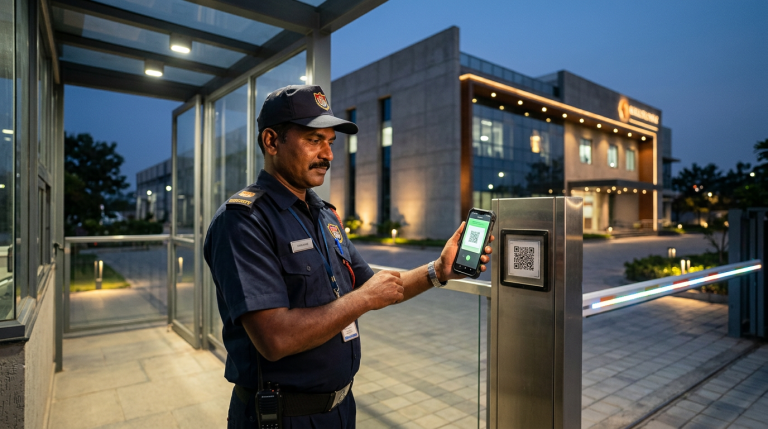
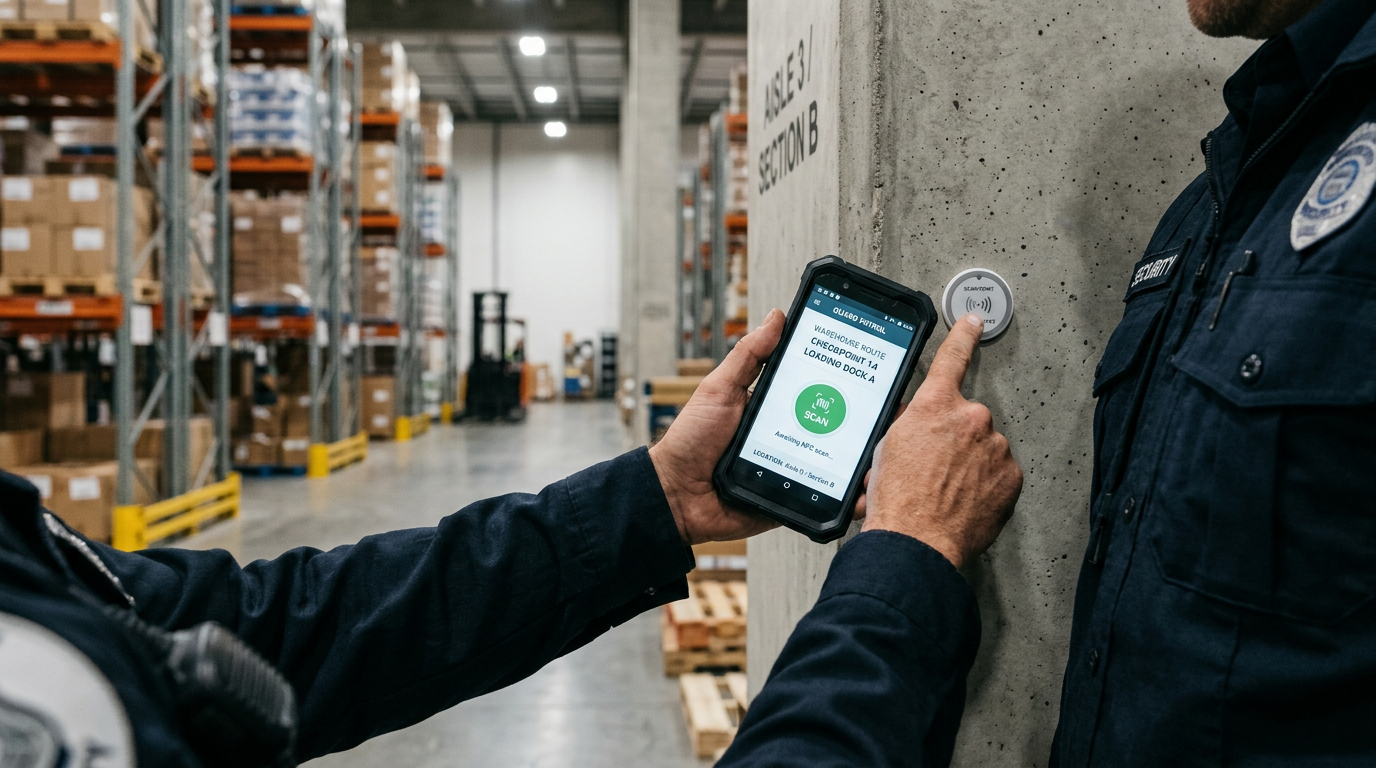
These devices work by having a guard scan checkpoints—usually NFC tags or QR codes—placed along their patrol route. The scan logs the time and location. The key difference lies in what happens next and the capabilities of the device itself. This is where the two major types of guard monitoring devices diverge completely.
The Two Main Types of Devices
- Dedicated Hardware Wands: These are rugged, single-purpose devices, often called pipes, wands, or guard scanners. The guard carries the wand, taps it on checkpoints, and at the end of their shift, the device is docked in a cradle to download the data to a local computer.
- Smartphone Apps: Here, the guard uses a standard Android or iOS smartphone with a specialized security guard app. The phone’s built-in camera or NFC reader is used to scan checkpoints. The data is instantly transmitted over Wi-Fi or mobile data to a cloud-based server for real-time monitoring.
The Old School: Dedicated Hardware Wands
Patrol wands have been around for decades. They are built to be tough and do one thing only: record checkpoint scans. They feel substantial in your hand, and the battery often lasts for days or even weeks.
Why Some Companies Still Use Them
The main selling point is simplicity and perceived durability. The training ka time is very low because there is only one button. You give it to a guard and say, “Tap this on the points.” There’s no screen, no other apps to get distracted by. Some managers in harsh industrial environments like them because they believe they can withstand more abuse than a standard smartphone. And honestly, some clients, especially those with very old tender documents, still specify a “pipe system,” so companies supply them to win the contract.
The Practical Downsides
The biggest issue is the lack of real-time data. You are always looking at the past. An incident happens, a checkpoint is missed, a patrol is cut short—you only find out hours later. I had a situation at a large hospital where a supervisor had to drive an hour back to the site office because he forgot the wand’s data cable. The entire day’s patrol data for a 200-bed facility was stuck until he could make the trip. That’s a huge operational failure.
These devices are also deceptively expensive. The wand itself is just one part. You need the proprietary docking station, the special software for your PC, and the checkpoints. And when a wand breaks or is lost, replacing it is costly—often $300 to $500 for a single unit. You are locked into one vendor for everything.
The New Standard: Smartphone Apps
A modern patrol tracking app turns a standard, affordable smartphone into a powerful, multi-functional security tool. The guard uses the phone they already know how to operate to perform scans, and the data is available to supervisors instantly on a web dashboard.
More Than Just Tracking
This is the key difference. A smartphone isn’t just a guard scanner. It’s a complete communication and reporting device. Guards can:
- Submit Incident Reports: They can report a broken fence or a water leak instantly, complete with photos and notes. This is impossible with a wand. See how it works with incident reporting software.
- Get Real-Time GPS Tracking: Supervisors can see the guard’s location on a map in real-time, providing a layer of oversight and safety.
- Verify Attendance and Automate Reporting: Advanced features like Face Verification confirm the right guard is on duty at check-in, while Daily Email Reports automatically send a comprehensive patrol summary to agency and site managers every morning.
- Use Panic Buttons: If a guard is in trouble, they can press a button in the app to send an immediate alert with their location to the entire team.
- Benefit from Lone Worker Safety: Many apps include features like a “man-down” alert, which automatically triggers an alarm if the phone doesn’t move for a set period.
Addressing the Concerns
The common objections are battery life and potential for misuse. Honestly, battery life isn’t the issue it once was. A decent, low-cost Android phone will easily last a 12-hour shift running a patrol app. As for misuse—guards playing games or using social media—this is easily solved. You can use Mobile Device Management (MDM) software to lock the phone down so it only runs the guard patrol app. Or, simply use company-provided phones with a work-only SIM card.
Key Facts
- A dedicated guard patrol wand typically costs between $200 to $500 per unit, not including the docking station or software.
- A low-cost Android phone suitable for guard patrol duties can be purchased for around $100 to $150.
- Smartphone apps provide real-time data and GPS tracking; wands provide historical data only after manual download.
- Total Cost of Ownership (TCO) is a better metric than upfront price, as it includes hardware, software, and likely replacement costs over time.
- Smartphones serve as multi-purpose tools, integrating patrol tracking with incident reporting and lone worker safety features.
Cost Comparison: The 3-Year Total Cost of Ownership
Let’s break down the real numbers. A security manager often looks at the upfront price, but the true cost of a guard tracking device unfolds over time. I’ve created a simple 3-year Total Cost of Ownership (TCO) model based on my experience deploying both systems for a single guard. This TCO focuses only on the device and associated software license costs.
Assumptions:
– Software license cost is illustrative, based on a typical SaaS plan.
– A low-cost, company-provided Android device costs $120.
– A dedicated wand costs $350.
– I’m assuming a 50% chance of needing to replace one wand over 3 years due to damage, loss, or battery failure ($350 * 0.5 = $175 average cost).
– I’m assuming one planned smartphone replacement in year 3 to ensure reliability.
| Cost Component (Per Guard) | Dedicated Patrol Wand | Smartphone App (Company-Provided) |
|---|---|---|
| Year 1: Upfront Hardware | $350 | $120 |
| Year 1: Annual Software License | $72 | $72 |
| Year 2: Hardware Costs | $0 | $0 |
| Year 2: Annual Software License | $72 | $72 |
| Year 3: Hardware Costs | $175 (Replacement Risk) | $120 (Planned Replacement) |
| Year 3: Annual Software License | $72 | $72 |
| 3-Year Total Cost | $741 | $456 |
Analyzing the Numbers
The results are clear. Even with a planned replacement, providing your guard with a company-owned smartphone is over 38% cheaper than using a patrol wand over a three-year cycle. The wand’s high initial cost and the significant expense of replacing a proprietary unit make it a poor long-term investment. The risk is high. If you lose or break a $120 Samsung phone, it’s a small, predictable cost. Losing or breaking a $350 wand is a major hit to the budget.
What about a “Bring Your Own Device” (BYOD) model? On paper, it’s the cheapest, as your hardware cost is $0. The 3-year TCO would just be the software license cost ($216). But the BYOD ka tension alag hai. You have to deal with different phone models, guards not charging their phones, and arguments over data usage. For most professional security companies, providing a basic, locked-down company phone is the most balanced and professional approach. It is still significantly more affordable than the old wand system. For more on budgeting, see our pricing guide.
When Does a Hardware Wand Still Make Sense?
I believe in being honest about technology’s limits. A wand isn’t always the wrong choice, but the use case is very, very narrow in 2024.
The only time I would consider a wand today is for a site with a specific, extreme requirement. For example, some oil and gas facilities require “intrinsically safe” devices that cannot produce a spark. Specialized, certified wands exist for these hazardous environments. Another rare case is a site with absolutely no mobile signal and no Wi-Fi access whatsoever. Since modern smartphone apps transmit all patrol data live to the cloud, they rely on a Wi-Fi or mobile data connection. This is what provides managers with instant alerts and visibility. For the rare location with zero connectivity (like an underground bunker), this is a consideration, but virtually all commercial and residential sites have sufficient coverage for a live system to operate perfectly.
Frequently Asked Questions
What is a guard tracking device?
A guard tracking device is a tool to monitor security guard patrols, providing digital proof that they have visited specific locations. It uses technology like NFC, QR codes, or GPS to log the time and place of each check-in, replacing unreliable paper logbooks for better accountability.
How does a security guard tracking device work?
A security guard carries a device, either a dedicated wand or a smartphone, and taps it on checkpoints placed along their route. This simple action logs the time, date, and location of the scan, creating an electronic record of the full patrol that supervisors can review.
Are smartphone apps reliable for guard tracking?
Yes, modern smartphone apps are extremely reliable for guard tracking. Because they transmit all data live to the cloud over Wi-Fi or mobile data, managers can see patrol progress, GPS locations, and incident reports instantly. This real-time transmission from proven, mass-produced hardware provides superior reliability and oversight compared to older systems.
How much does a guard patrol wand cost?
A single guard patrol wand, often called a “pipe” or guard scanner, typically costs between $200 and $500. This price is just for the handheld unit and usually does not include the software, checkpoints, or the docking station required to download the patrol data.
What is the main advantage of a smartphone over a patrol wand?
The main advantage is real-time information. A smartphone-based guard tracking device sends patrol data to supervisors instantly, allowing for live monitoring and immediate response. A patrol wand, in contrast, stores data that can only be reviewed hours later after being manually downloaded.
Can I track my security guards with GPS?
Yes, you can track your security guards with GPS if they are using a smartphone-based guard tracking device. These apps can provide both the live GPS location of the guards and a historical “breadcrumb” trail of their movement during their shift, a feature not available on traditional patrol wands.
Bottom Line
For nearly every security operation today—from residential communities and hospitals to factories and corporate campuses—a smartphone is the superior guard tracking device. The idea that a dedicated patrol wand is tougher or simpler is an outdated concept from a decade ago. Modern, low-cost smartphones are resilient enough for the job, and their capabilities go far beyond what a wand can ever offer.
When you look past the initial sticker price and calculate the total cost over three years, the financial argument is just as strong. A smartphone-based system is not only more powerful and flexible, but it is also the more financially responsible choice. You get real-time tracking, incident reporting, and lone worker safety features for less than the cost of a basic, offline wand system. It’s time to leave the wands in the museum where they belong.
Ready to upgrade from outdated wands or paper? Try our 15-day free demo — 1 guard, 1 site. No card required. See GuardPatrolling in action.