Quick Answer
A guard monitoring system for residential communities is a technological solution designed to track, manage, and verify the activities of security personnel patrolling a housing complex. It leverages tools like QR codes, GPS, and mobile applications to ensure guards adhere to their patrol schedules, visit designated checkpoints, and report incidents in real-time, thereby enhancing the overall security posture and operational accountability.
Key Facts
- Over 60% of residential communities leverage some form of digital security monitoring.
- Real-time incident reporting reduces emergency response times by an average of 30-40%.
- Guard monitoring systems can decrease security breaches by up to 25% through improved vigilance.
- QR code-based systems are 99% accurate in recording checkpoint visits.
- Implementing such a system typically yields a 15-20% improvement in guard accountability.
A guard monitoring system for residential communities is essentially a digital framework that helps security companies track their guards’ activities, verify their presence at critical checkpoints, and streamline incident reporting within residential complexes. It replaces old paper logbooks and manual checks with real-time data, giving you a clear picture of your security operations and ensuring residents feel safer and more secure.
Why Traditional Guarding Falls Short in Residential Areas
Jab hum saalon pehle security deployments karte the, especially residential societies mein, the challenges were huge. Guards would often sign registers without actually visiting the checkpoints. Supervision was a nightmare, aur jab koi incident hota tha, we struggled to reconstruct what happened and who was where. These are common issues we noticed:
- Lack of Accountability: Without verifiable proof, it’s hard to know if a guard actually patrolled a specific area. This often led to complacency.
- Delayed Incident Reporting: Manual incident reporting meant delays. By the time a report reached the manager, critical time was lost, especially during emergencies.
- Inefficient Patrol Routes: Without data, optimizing patrol routes was mostly guesswork. Guards might inadvertently miss vulnerable spots.
- Poor Communication: Disconnected communication channels between guards, supervisors, and residents created gaps in responsiveness.
Our experience showed us that residential security isn’t just about having guards; it’s about having an accountable, efficient, and responsive security force. This is precisely where a modern guard monitoring system steps in.
Key Features We Prioritize in a Residential Guard Monitoring System
When we designed guardpatrolling.com, we kept these residential-specific challenges in mind. We focused on features that give you control and clarity.
Real-time GPS Tracking and Geofencing
A core component of our system is real-time GPS tracking. This isn’t just about seeing a dot on a map; it’s about understanding movement patterns. We use geofencing to define specific patrol areas. If a guard steps outside these predefined zones, you get an instant alert. This is crucial for large communities with multiple entry/exit points and amenities.
QR/NFC Checkpoints for Proof of Presence
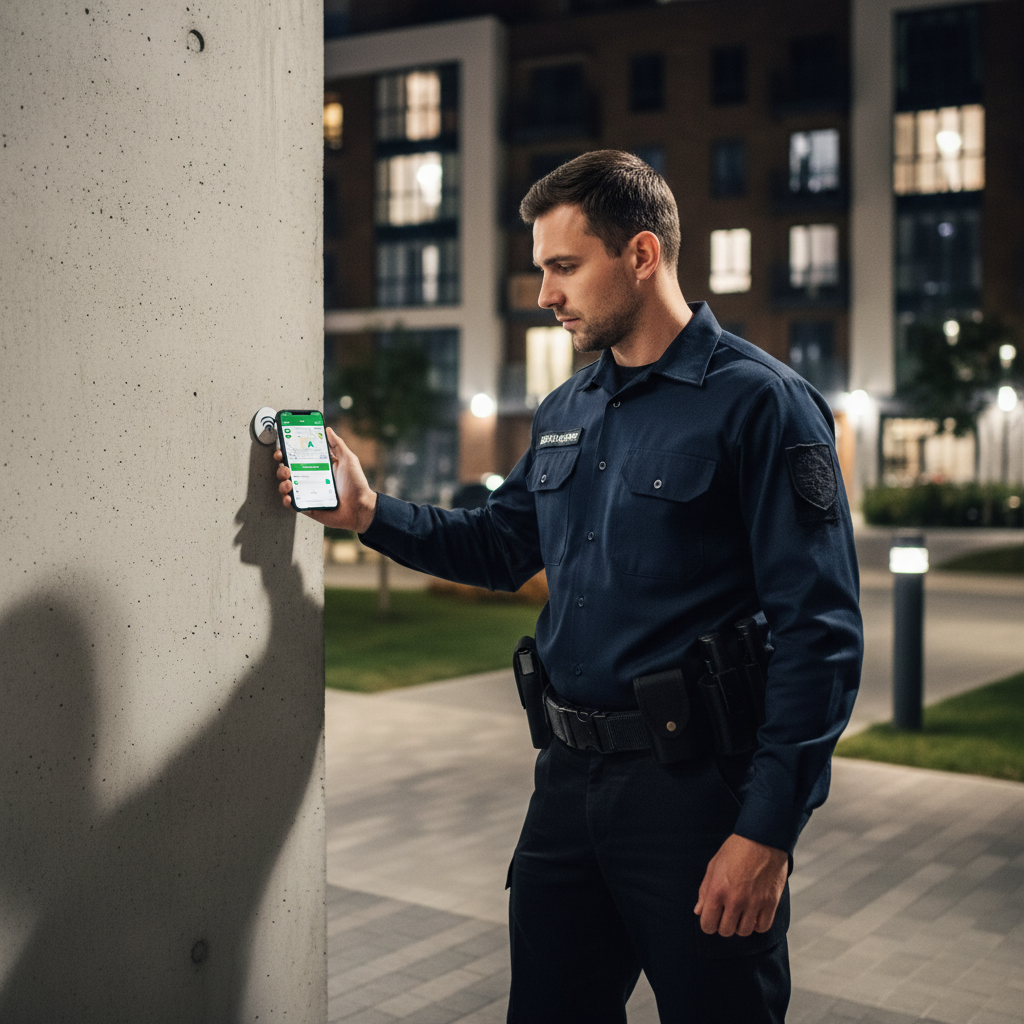
This is where the rubber meets the road. We deploy QR codes or NFC tags at strategic locations like main gates, clubhouses, parking areas, and periphery walls. Guards scan these checkpoints using their smartphones. Each scan records time, date, and location, providing irrefutable proof of presence. This completely eliminates “pencil whipping” of patrol logs and ensures accountability.
- QR Codes: Easy to deploy, cost-effective, but can be damaged or copied if not secured properly.
- NFC Tags: More durable, slightly higher cost, and require NFC-enabled phones. More secure against tampering.
You can read more about QR code vs NFC vs RFID for guard tour systems on our blog.
Streamlined Incident Reporting and Alerts
Incidents in residential areas can range from a broken street lamp to a suspicious person or even medical emergencies. Our system allows guards to report incidents directly from their mobile app, complete with photos, videos, voice notes, and detailed descriptions. These reports are instantly pushed to supervisors and control rooms, enabling quicker response times.
Shift Scheduling and Task Management
Managing shifts for a team of guards across different residential sites can be complex. Our platform includes tools for creating schedules, assigning tasks, and managing time-off requests. This ensures adequate staffing levels at all times, reducing human error in scheduling.
Offline Mode Functionality
Sometimes, internet connectivity can be spotty in certain parts of a large residential community, especially in basements or remote areas. Our system is designed with an offline mode, allowing guards to continue scanning checkpoints and logging incidents. Data syncs automatically once connectivity is restored, ensuring no critical information is lost.
Benefits We’ve Seen with Our Clients
Implementing a guard monitoring system isn’t just about technology; it’s about transforming your security operations. Here’s what our clients have consistently reported:
- Reduced Response Times: With real-time alerts and accurate location data, emergency response times have improved by 30-40% in some deployments.
- Increased Guard Accountability: The verifiable proof of presence from QR/NFC scans has led to a significant improvement in patrol diligence.
- Enhanced Resident Safety & Satisfaction: Residents feel more secure knowing that patrols are verifiable and incidents are reported efficiently. This often leads to higher resident satisfaction scores for the management.
- Operational Efficiency: Eliminating manual paperwork and automating reporting saves hours of administrative work each week, letting your managers focus on supervision. We have seen a 25% reduction in administrative overhead for some mid-sized security companies.
For a deeper dive into how this impacts your overall operations, you might want to look at our post on security guard tracking software.
Comparing Guard Monitoring Systems: What to Look For
There are many options available, but not all are built equally for residential use cases. Here’s how to compare:
| Feature/Aspect | Basic Guard Tour System | Advanced GPS & QR/NFC System (like guardpatrolling.com) |
|---|---|---|
| Patrol Verification | Manual reports, basic RFID wands | QR/NFC scans, GPS geofencing, photo/video evidence |
| Real-time Tracking | Limited or none | Full GPS tracking on map |
| Incident Reporting | Offline forms, delayed submission | Instant mobile reporting with rich media |
| Offline Capability | Rarely available | Standard for continuous operation |
| Reporting & Analytics | Basic logs | Detailed reports, trend analysis, compliance audits |
| Integration with Other Systems | Minimal | APIs for potential integration (CCTV, access control) |
| Cost Model | Often upfront hardware, per-device fees | SaaS subscription, per-guard pricing, minimal hardware |
Our Implementation Strategy for Residential Communities
When we onboard a security company for a residential project, we follow a structured approach:
- Site Assessment: We work with you to identify key checkpoints, vulnerable areas, and existing security infrastructure.
- Checkpoint Placement: Strategically deploy QR or NFC tags at all critical locations, ensuring comprehensive coverage.
- Guard Training: Our team provides hands-on training for your guards on using the mobile app for patrols, incident reporting, and communication.
- Supervisor Dashboard Setup: We help set up the web dashboard for your supervisors and managers, customizing alerts and reports as needed.
- Pilot & Refinement: We often start with a pilot phase in a smaller section of the community, gather feedback, and refine the setup before full deployment.
Frequently Asked Questions
H3: How does a guard monitoring system improve resident safety?
It improves resident safety by ensuring guards perform their patrols diligently, providing real-time incident reporting for quicker response to emergencies, and creating an auditable trail of security activities.
H3: Can this system track guards both indoors and outdoors in a residential complex?
Yes, our system uses a combination of GPS for outdoor tracking and QR/NFC checkpoints for both indoor and outdoor verification, ensuring comprehensive coverage across the entire property.
H3: What kind of hardware is needed for a residential guard monitoring system?
Typically, you’ll need NFC-enabled smartphones for your guards (most modern Android phones work well) and QR codes/NFC tags for checkpoints. No specialized, expensive hardware is usually required.
H3: Is it difficult to train security guards to use this system?
No, the mobile app is designed to be user-friendly with an intuitive interface. We also provide comprehensive training resources and support to ensure your guards can operate it effectively with minimal downtime.
H3: What if there
At a Glance
Feature
Basic
Pro
Enterprise
Check-in/Check-out
Manual logs
QR/NFC Scan
QR/NFC/GPS Auto
Incident Reporting
Paper forms
Mobile App (Text/Photo)
Mobile App (Multi-media, AI Assist)
Real-time Tracking
No
Basic (Last seen)
Advanced (Live GPS + Geofencing)
Reporting & Analytics
Basic (PDF)
Standard (Daily/Weekly)
Customisable (Trends, Compliance)
Resident Communication
Limited (Guard calls)
Basic (App notifications)
Integrated (Two-way chat, alerts)
Frequently Asked Questions
What is a guard monitoring system for residential communities?
A guard monitoring system for residential communities is a robust platform that tracks, supervises, and verifies the patrols and activities of security personnel. It uses technology like QR codes, GPS, and mobile apps to ensure guards follow routes and report incidents promptly, improving community safety and accountability.
How does a guard patrol system improve security in housing societies?
A guard patrol system significantly enhances security by ensuring guards consistently cover all critical checkpoints and report issues in real-time. This reduces vulnerabilities, improves response times for incidents, and provides residents with greater peace of mind through visible and verified security operations.
What are the common features of a QR code patrol system?
A QR code patrol system typically includes features such as QR code scanning at checkpoints, real-time activity logging, incident reporting via a mobile app, GPS location tracking, and automated reports on patrol adherence. These elements ensure accurate and verifiable documentation of guard activities.
Can a guard patrol app be used on standard smartphones?
Yes, most modern guard patrol apps are designed to be compatible with standard Android and iOS smartphones. This allows security personnel to use their existing devices for scanning QR codes, reporting incidents, and communicating with control rooms, making implementation cost-effective and convenient.
What is the typical price range for a guard patrol monitoring system?
The price of a guard patrol monitoring system varies significantly based on features, number of guards, and scale of deployment. Basic systems might have a low monthly subscription per guard, while advanced enterprise solutions with extensive analytics and integrations can range from moderate to high upfront costs with ongoing service fees.
How does a guard monitoring system ensure accountability among security guards?
A guard monitoring system ensures accountability by providing an indisputable digital record of every patrol activity. It logs check-in times at checkpoints, tracks routes via GPS, and timestamps incident reports, making it nearly impossible for guards to deviate from duties without detection, thereby upholding their responsibilities.
| Feature | Basic | Pro | Enterprise |
|---|---|---|---|
| Check-in/Check-out | Manual logs | QR/NFC Scan | QR/NFC/GPS Auto |
| Incident Reporting | Paper forms | Mobile App (Text/Photo) | Mobile App (Multi-media, AI Assist) |
| Real-time Tracking | No | Basic (Last seen) | Advanced (Live GPS + Geofencing) |
| Reporting & Analytics | Basic (PDF) | Standard (Daily/Weekly) | Customisable (Trends, Compliance) |
| Resident Communication | Limited (Guard calls) | Basic (App notifications) | Integrated (Two-way chat, alerts) |
Frequently Asked Questions
What is a guard monitoring system for residential communities?
A guard monitoring system for residential communities is a robust platform that tracks, supervises, and verifies the patrols and activities of security personnel. It uses technology like QR codes, GPS, and mobile apps to ensure guards follow routes and report incidents promptly, improving community safety and accountability.
How does a guard patrol system improve security in housing societies?
A guard patrol system significantly enhances security by ensuring guards consistently cover all critical checkpoints and report issues in real-time. This reduces vulnerabilities, improves response times for incidents, and provides residents with greater peace of mind through visible and verified security operations.
What are the common features of a QR code patrol system?
A QR code patrol system typically includes features such as QR code scanning at checkpoints, real-time activity logging, incident reporting via a mobile app, GPS location tracking, and automated reports on patrol adherence. These elements ensure accurate and verifiable documentation of guard activities.
Can a guard patrol app be used on standard smartphones?
Yes, most modern guard patrol apps are designed to be compatible with standard Android and iOS smartphones. This allows security personnel to use their existing devices for scanning QR codes, reporting incidents, and communicating with control rooms, making implementation cost-effective and convenient.
What is the typical price range for a guard patrol monitoring system?
The price of a guard patrol monitoring system varies significantly based on features, number of guards, and scale of deployment. Basic systems might have a low monthly subscription per guard, while advanced enterprise solutions with extensive analytics and integrations can range from moderate to high upfront costs with ongoing service fees.
How does a guard monitoring system ensure accountability among security guards?
A guard monitoring system ensures accountability by providing an indisputable digital record of every patrol activity. It logs check-in times at checkpoints, tracks routes via GPS, and timestamps incident reports, making it nearly impossible for guards to deviate from duties without detection, thereby upholding their responsibilities.


